)
2025: The Year Data Work Opened Up
TL;DR
Agentic systems changed the shape of data work in 2025 by making serious, production grade workflows faster, more accessible, and usable by teams far beyond traditional data roles.
2025 will be remembered not as a year of incremental upgrades, but as a turning point in how teams actually do data work.
The real breakthrough wasn’t marginal tooling improvements. It was agentic technology. Once agents could plan, reason, iterate, and execute reliably, the shape of data work changed. At Zerve, that made the decision clear. We doubled down on agentic systems and built the product around them, not beside them.
That technical shift drove a commercial one.
We opened the floodgates with fully bottom up, product led pricing. No heavy gates. No long sales cycles. Just the ability for anyone to start doing real data work immediately.
The shift we expected. The breadth of it caught us off guard
Thousands of users showed up. Many were exactly who we had built for from day one. Experienced data scientists and engineers using agents for familiar work like exploratory data analysis, feature engineering, model training, validation, and production pipelines.
But alongside them came a much broader set of users, applying the same technology in ways we hadn’t fully anticipated.
We saw RevOps teams ask agents to take messy spreadsheets and produce accurate forecasts based on a handful of key drivers. Finance teams stress tested budgets and scenarios. Security and IT leaders reviewed last year’s risks and allocated cyber budgets accordingly. Product and operations teams explored trade offs and constraints without needing to become technical first.
In-person planning to drive the PLG execution
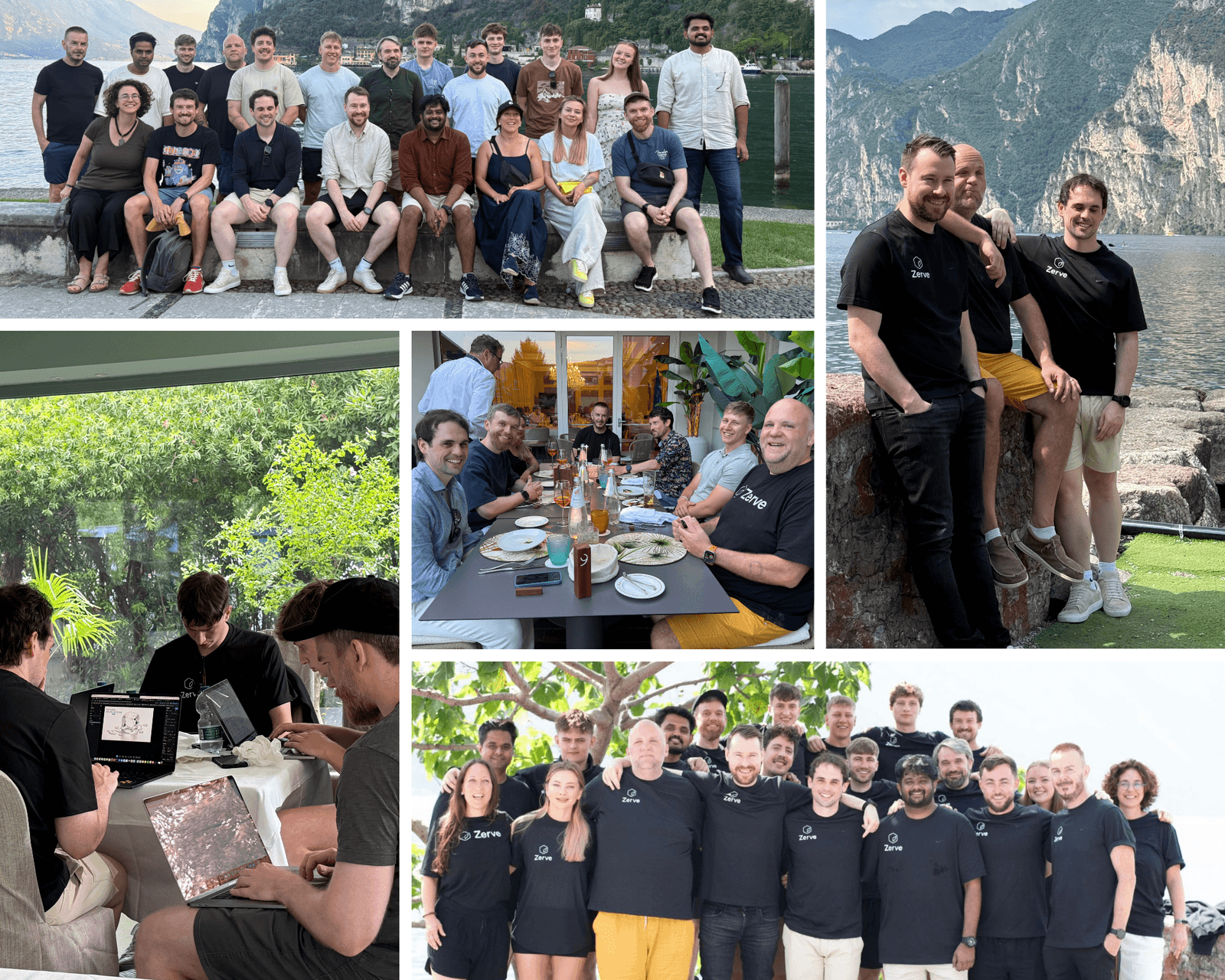
For the first time, the company gathered in one place.
Zerve has always been remote by default, and that has been a huge advantage. It allowed us to build a team across geographies and time zones and move quickly. But being together in person had a different effect.
Conversations that would normally take weeks compressed into days. Decisions landed faster. Trade offs became clearer. It sharpened our focus on what was already working, especially our commitment to bottom up, product led growth. The direction didn’t change, but the pace and confidence did.
The change was evident almost immediately
At the same time, we heard directly from users from all over the world. New friends and old. The feedback was energising and consistent. The agent was helping people do real work faster, with less friction, and with more confidence.
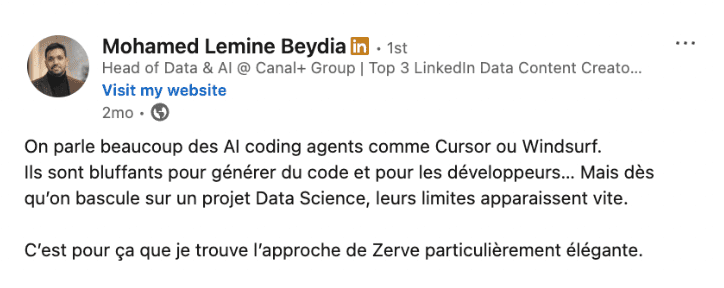

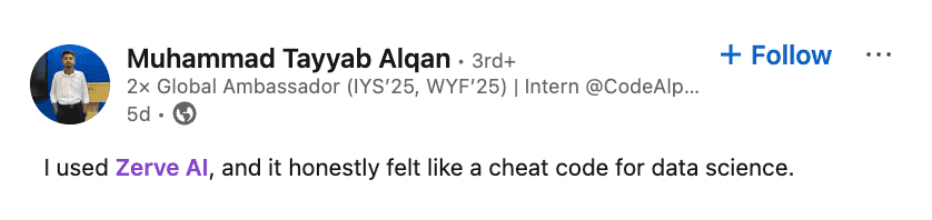
That moment made the shift tangible.
Data work is no longer defined by job title or depth of technical background. It is defined by intent. Having a question, a constraint, or a decision to make, and working with an agent to get there. The system absorbs mechanical complexity so people can focus on direction and judgment.
What stood out this year wasn’t that data work became easier. It became more accessible without becoming less serious.
Agentic technology didn’t remove rigor. It redistributed it. And in doing so, it expanded who gets to participate in meaningful data work faster and further than we had expected.
The Small UX Decisions That Changed Everything
One of the biggest internal obsessions this year was throughput. We cared deeply about every click, every context switch, and every moment where a user had to stop thinking about their problem and start thinking about the tool.
Looking back, these were the five small things that made an outsized difference.
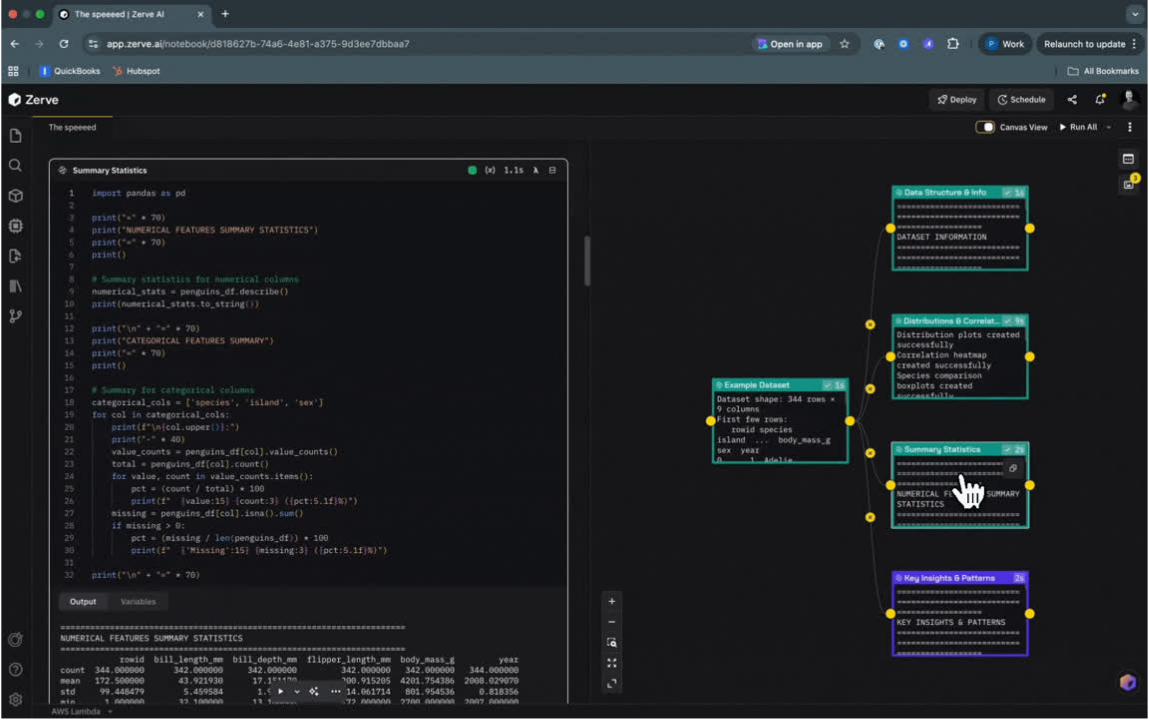
1. A truly integrated Canvas and Notebook experience
We resisted forcing users into choosing a single “right” view. Canvas and Notebook are both first class, powerful in their own right, and designed to work together seamlessly. People use Canvas to work with the agent and orchestrate flows, then jump directly into the relevant notebook block for code review. Just as often, they reshape the notebook itself by changing connections on the Canvas. That bidirectional flow turned out to be incredibly powerful.
2. Block descriptions
This one seemed tiny at the time. In practice, it changed how new users and managers engage with work. Being able to quickly understand what a block does without reading code reduced friction immediately and made complex projects far more approachable.
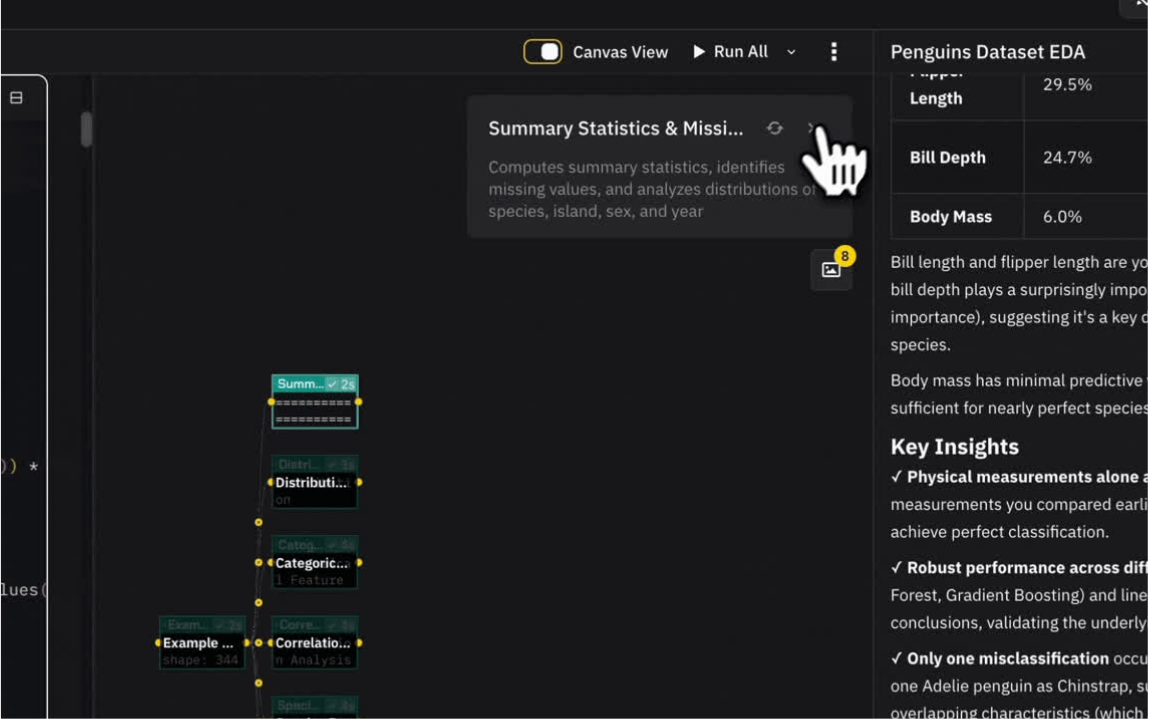
3. Multiple ways to see the agent’s work
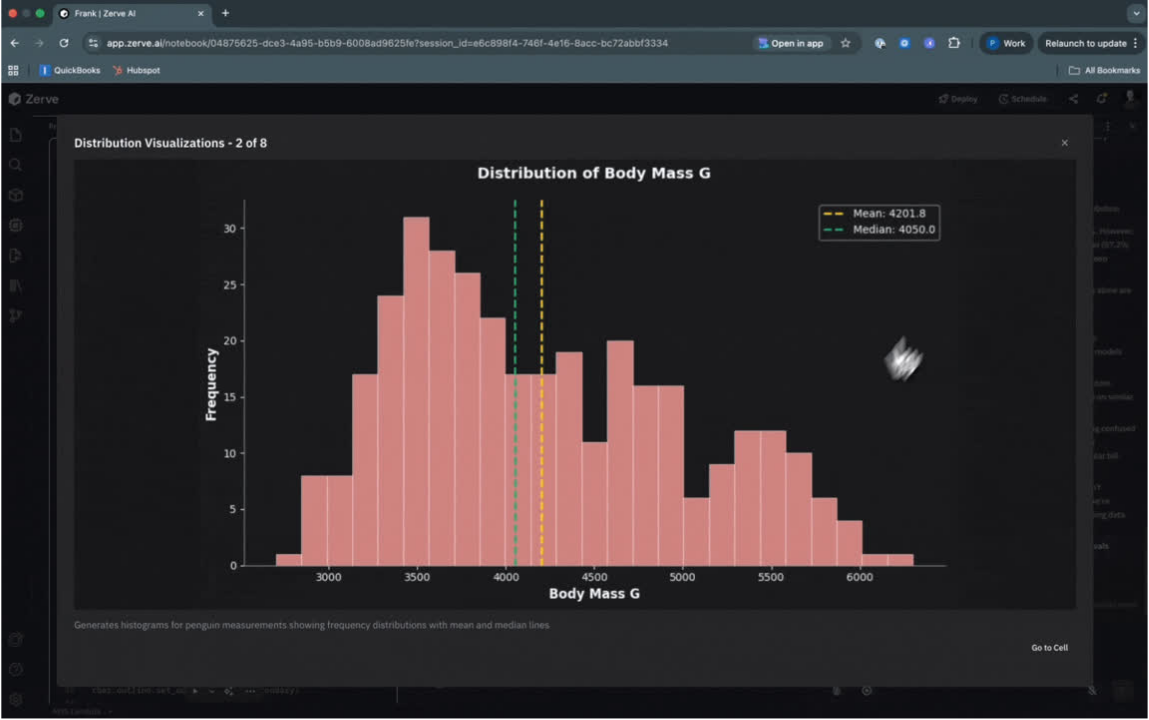
Chat and the image gallery became a huge hit. Agentic data work benefits from being observable, and giving users multiple ways to review what the agent is doing made the system feel more transparent and trustworthy. This was especially important for newer users, but quickly became a default workflow for everyone.
4. Designed for real human agent collaboration
Zerve became less of a tool and more of a shared workspace between human and agent. A small example of this is the “follow the agent” interaction. It looks minor, but it’s one of the most heavily used actions in daily workflows. People want to stay in sync with the agent’s thinking and movement, and that tight loop mattered.
5. Agent modes that match intent
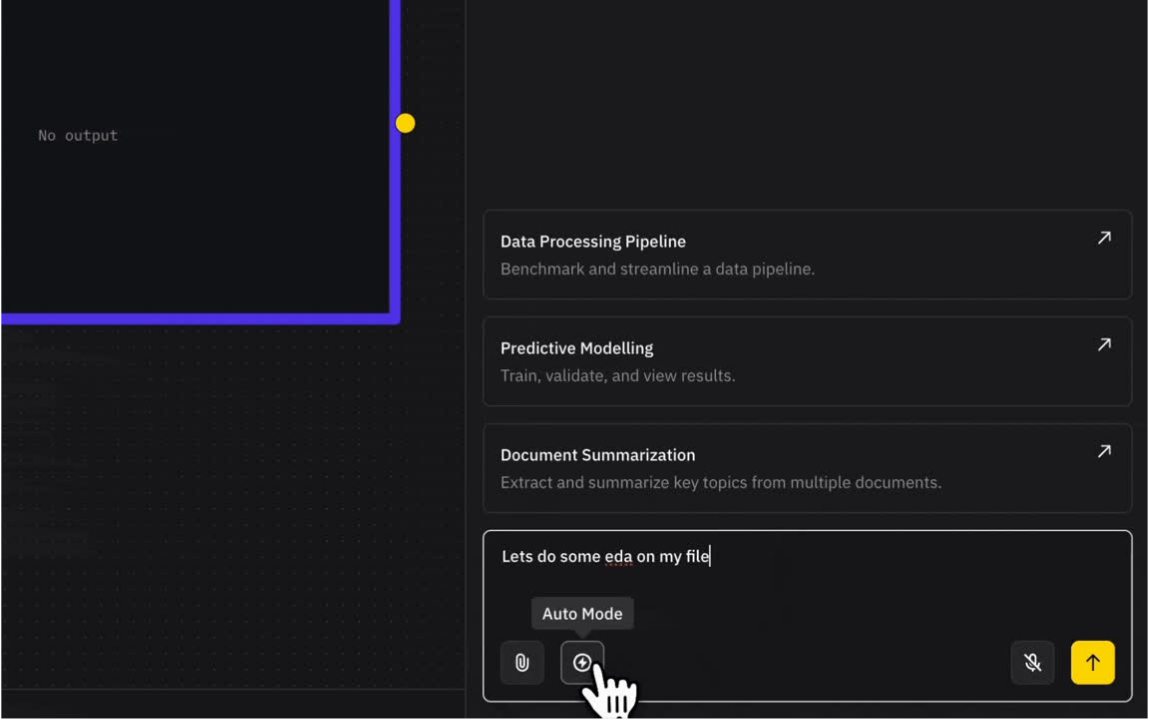
Agent modes turned out to be critical. Sometimes you want to one shot a task and let the agent run end to end. Other times you want to go step-by-step. Auto mode lets the agent execute actions automatically. Manual mode lets the human review and approve each action before it runs. That flexibility lets people choose speed or control depending on the moment.
None of these were flashy on their own. But together, they changed how the platform feels to use.
That’s the mindset we’re bringing into 2026. Fewer barriers. Faster flow. Humans and agents working together with confidence.