)
VIDEO: Building Systems, Not Point Solutions

TL;DR
A conversation about workflow automation, startup failure, and designing software for AI agents instead of humans.
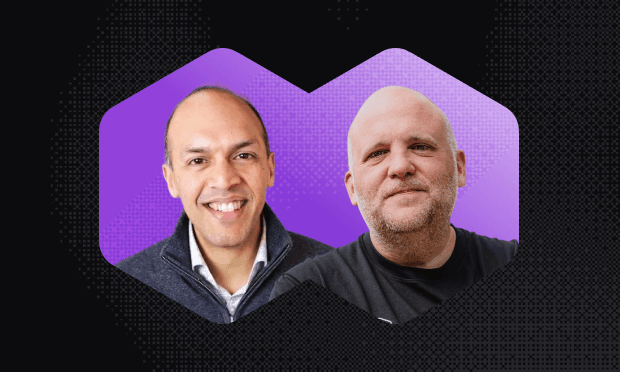
For our latest Data Day, I jumped on a call with an old buddy of mine, Satadru Sengupta. In 2015, we were both crammed into that Chatham Street office in Boston, the one with the bar on the ground floor and some law firm in the middle. DataRobot had maybe 40 people at the time. We were calling ourselves "customer-facing data scientists" because nobody had come up with "forward deployed engineer" yet.
The Duct Tape Problem
Satadru's been in home services for six years now, working with plumbers and HVAC techs and the guys who show up to fix your garbage disposal. One thing he kept coming back to: these folks are drowning in software. Every YC batch has five startups building an AI receptionist or a scheduling tool or some lead gen thing. Service providers sign up for all of them, and then they're juggling six different dashboards that don't talk to each other.
I see the same dynamic with data scientists. Someone's got their exploratory work in Jupyter, their production code in VS Code, some deployment script they copied off Stack Overflow, and a CI/CD pipeline held together with prayer. The gaps between tools are where things fall apart.
Satadru's new company, Nimbus, tries to own the whole workflow. Booking, quotes, communication, payment, reviews. You can use pieces separately if you want, but he thinks the real leverage comes from one system that handles everything end to end.
What "Agent-Native" Means in Practice
I asked him how LLMs have changed what he's building, and he made a distinction I hadn't thought about before.
His first company, Dobby, was automation-heavy, but humans still ran it. There was a customer success manager looking at a dashboard and making decisions. The website was designed for homeowners to click around on.
Nimbus works differently. The websites they generate for service providers are structured so an AI agent can read and act on them. They're optimizing content for ChatGPT to reference, not just for Google to rank.
What this looks like in practice: Nimbus can spin up a website for a plumber in Austin by pulling reviews from all over the internet, aggregating everything, and generating structured content with zero marginal cost. A few years ago you'd need a designer and an engineer and a couple weeks of work. Now it happens automatically.
The Dobby Post-Mortem
Satadru was pretty open about why Dobby didn't work out. They'd found a profitable niche: homeowners who bought houses when interest rates were 3% or lower. Those people had money to spend on home services.
Then rates spiked and homeowners slashed their home services budget drastically. Dobby was profitable in their existing cohort, but that cohort had stopped growing. Because of that, the path forward just kind of disappeared.
The takeaway: stress-test your assumptions when things are going well, not after. What happens if the economy causes great swings in customer behavior? What if your ICP stops expanding? Perhaps Dobby might've pivoted earlier had they asked those questions sooner. (But honestly, these things just happen. Can’t predict it all.)
Try and Buy
At DataRobot we had enterprise sales. Dedicated budgets, scheduled demos, procurement processes. You could get someone's attention for an hour if you worked the right channels.
Service providers don't work that way. Nobody's blocking off Tuesday afternoon to evaluate software for their handyman business. If you want their attention, you have to give them something valuable upfront and hope they stick around.
Nimbus gives providers a free website with all their reviews aggregated in one place. The marginal cost to Nimbus is basically nothing, so they can afford to do it. Once a provider sees the value, maybe they convert to the $200/month subscription. Maybe they don't. But there's really no other way in.
Where Nimbus Is Now
Nimbus is in an early stage right now, one we call “pre-product-market fit”. It involves a lot of assumptions, testing, and reiterating. They have around 50 paying customers at the moment, with an ambitious but doable goal of 4x-ing in the next quarter. They've launched in 20 markets and now they're trying to figure out which U.S. cities to double down on with their expansion. Home services is a $46 trillion market if you count the value of American homes. Lots of inefficiency, lots of people who don't know what things should cost or who to trust. Satadru's bet is that six years of learning the workflow gives him an edge. Maybe it does. We'll see how it plays out.
Watch the entire conversation:
FAQs
A point solution does one thing well. You buy an AI receptionist from one company, scheduling from another, invoicing from someone else. Before you know it you've got six different logins and none of them talk to each other. A workflow system tries to handle the whole thing, start to finish. Booking, quotes, payment, reviews, all in one place. You lose some flexibility, but you gain a lot in terms of things actually working together. In industries like home services where there are a ton of handoffs between steps, the integration usually wins out because there are just too many places where stuff can fall through the cracks.
Most software was designed for a person to use. Dashboards, buttons, navigation menus. Agent-native software is built so that an AI can interact with it directly. That means clean data structures, machine-readable content, and interfaces that LLMs like ChatGPT can actually parse and pull information from. The idea is that more and more people are going to find products and services through AI rather than traditional search, so your software and web presence need to be built for that from the ground up. It goes beyond just having a nice-looking website.
This happens more often than people think. A company can be making money with a specific type of customer, but if that customer base stops growing, it's a real problem. Interest rate changes, shifts in consumer behavior, a market that turns out to be smaller than expected. When you've raised venture money, flat growth is a death sentence. You can't hit your milestones, you can't raise your next round, and eventually the math stops working. The lesson most founders learn too late is that you need to ask the hard "what if" questions while things are going well, not after the growth stalls.
Night and day. Enterprise buyers have procurement teams, scheduled evaluations, and dedicated budgets. A plumber or electrician running their own business? They're not carving out time to sit through your demo on a Tuesday afternoon. You have to give them something useful right away and hope they stick around long enough to pay for it. A lot of companies do this by offering a free tier or a low-cost entry point that delivers immediate value, like a free website or a tool that saves them 20 minutes a day. If they like it, maybe they convert to a paid plan. If not, you haven't lost much. But that's really the only way to get in the door with small business owners.