)
VIDEO: What Does It Mean To Be AI Native?

TL;DR
Being AI native doesn't mean knowing less. It means knowing different things, with a focus on orchestration, evaluation, and knowing which tools to call for which problems.
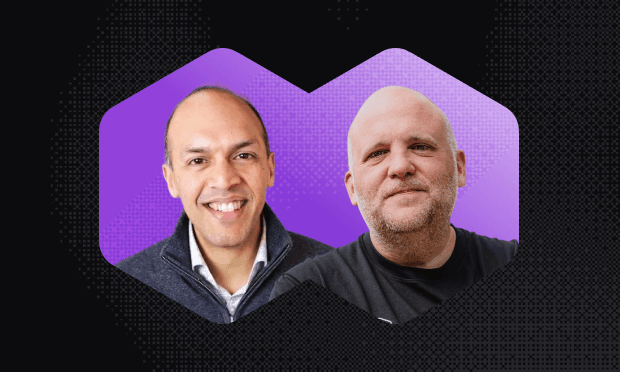
In our latest Data Day livestream, my guest Ray Mi and I explored a concept that's becoming central to how we think about AI adoption: what it means to be "AI native."
Ray, a data scientist with experience at DataRobot and Snorkel AI, drew a distinction between people and companies who grew up with AI as a given versus those adapting to it mid-stream.
Born Into It
"Kids are growing up in this environment. They know how to deal with it," Ray said. "It's similar to companies. Companies born from 2022 onwards are much more AI native, cloud native, digital native. They don't need to figure out how to pivot from traditional ML to an AI-native business model. They were born and raised in that era."
For established enterprises, the shift is harder. Ray compared them to heavy ships that struggle to change direction. They carry legacy infrastructure, existing workflows, and organizational habits that make transformation slow and costly.
The numbers bear this out: Ray cited industry research showing that while 95% of companies are adopting generative AI or agentic systems, only 13-14% report seeing tangible returns. That gap between adoption and value creation is where AI-native companies have an advantage. They're building with AI as a foundation rather than retrofitting it onto existing systems.
The Education Question
Our conversation touched on what AI-native learning might look like. Ray referenced a recent keynote by Fei-Fei Li at AI4, where she discussed how AI could transform education by reducing reliance on rote memorization. Instead of spending years memorizing facts, students could focus on higher-order thinking, using AI to handle recall and retrieval.
I offered a counterpoint from my own household: my daughter uses Chrome's built-in Gemini to solve math problems without working through them herself. The tool is so seamlessly integrated that she doesn't even leave the browser where she's doing homework.
This raised a question neither of us were able to fully answer: if AI-native students don't learn to do things the hard way first, does that matter? Or is "the hard way" just an artifact of pre-AI constraints?
Humans as Orchestrators
Ray's view on the future landed somewhere optimistic. Even as AI handles more execution, humans remain essential as the initiators and orchestrators.
"I am the agent," he said. "The other tools are there, but I'm the one that drives everything and orchestrates all those steps together. The motivation is the key. What to prompt, what you ask the AI to do is still the most human part."
For data scientists specifically, Ray sees the role evolving toward architecture and evaluation. Agentic systems involve many components working together: tool calls, user interactions, task routing. Each step's accuracy affects the final output. Designing those systems and measuring their performance still requires statistical thinking and scientific rigor.
"How those tasks are stitched together still requires some scientific mind to architect this process," Ray said. "You need a system that can work not only in the testing environment but at scale in production."
The implication: being AI native doesn't mean knowing less. It means knowing different things, with a focus on orchestration, evaluation, and knowing which tools to call for which problems.
Data Day is Zerve's livestream series featuring conversations with practitioners and leaders in data science and AI. Watch previous episodes here.
Frequently Asked Questions
Being AI native refers to individuals, especially kids, who grow up immersed in an environment where artificial intelligence is integrated into daily life, making them naturally adept at interacting with AI technologies.
Data Day is Zerve's livestream series featuring conversations around data, technology, and AI, including topics like what it means to be AI native and the future of AI in education and society.
Kids born into an AI-native environment are naturally familiar with AI tools and technologies. They intuitively understand how to use and interact with these systems, shaping new learning and communication styles.
AI-native learning envisions educational experiences deeply integrated with AI, where personalized learning paths, intelligent tutoring systems, and adaptive content help students learn more effectively in a technology-rich environment.
Humans act as orchestrators by guiding and managing AI technologies to augment human capabilities. This optimistic view sees humans collaborating with AI to enhance creativity, decision-making, and problem-solving rather than being replaced by machines.
The future of human-AI interaction is optimistic, focusing on synergy where humans leverage AI tools for better outcomes. This partnership aims to empower individuals and society through enhanced learning, productivity, and innovation.