)
10 Best AI Data Analysis Tools in 2026 (For Every Use Case)

TL;DR
The AI analytics market in 2026 is crowded with options, but the right tool depends entirely on your workflow, team size, and what you're actually trying to ship.
Every analytics vendor added "AI-powered" to their homepage around 2023. Most of them bolted on a chatbot and called it innovation. A few actually changed how teams work with data. We’ve evaluated these tools across real projects. Here's what actually matters for each one.
Microsoft Power BI
Power BI dominates enterprise BI because the math works out. $14/user/month Pro tier, and if you're already paying for Microsoft 365, the procurement conversation is trivial. Add Copilot ($30/user/month) for natural language queries.
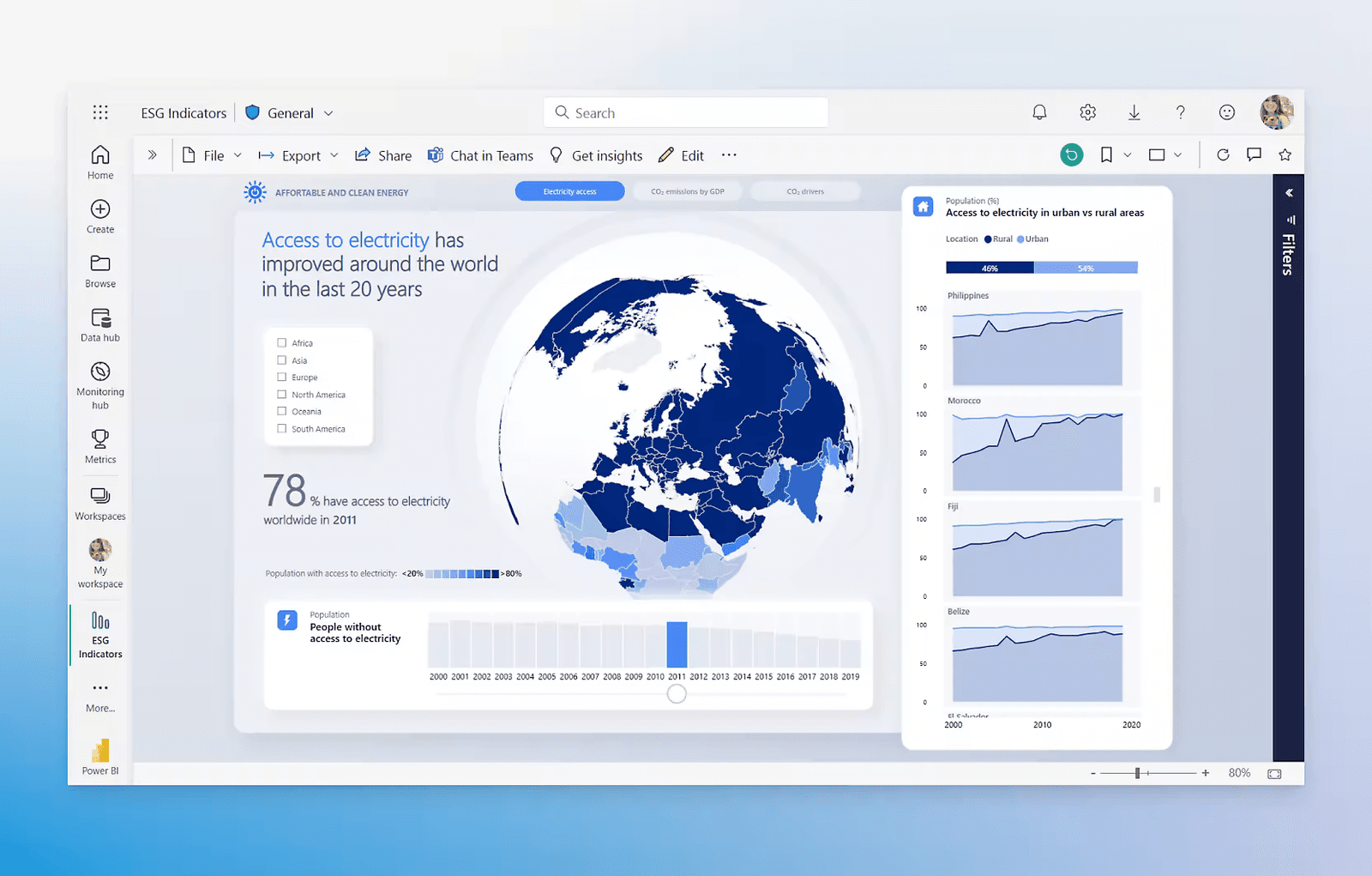
Copilot handles natural language queries reasonably well. Ask for a chart showing quarterly trends, it builds one. Ask it to write DAX formulas, it gets you 80% of the way there. The remaining 20% still requires understanding what DAX is actually doing under the hood.
The dependency on the Microsoft ecosystem cuts both ways. Teams/SharePoint/Azure integration is seamless. Trying to connect to systems outside that world gets painful fast. And the desktop app feels like it was designed in 2015, because it was.
Free desktop version. Pro at $14/user/month. Premium Per User at $20.
Tableau
Tableau visualizations look better than anything else in the category. When the deliverable is a board presentation or a public-facing data story, that matters.
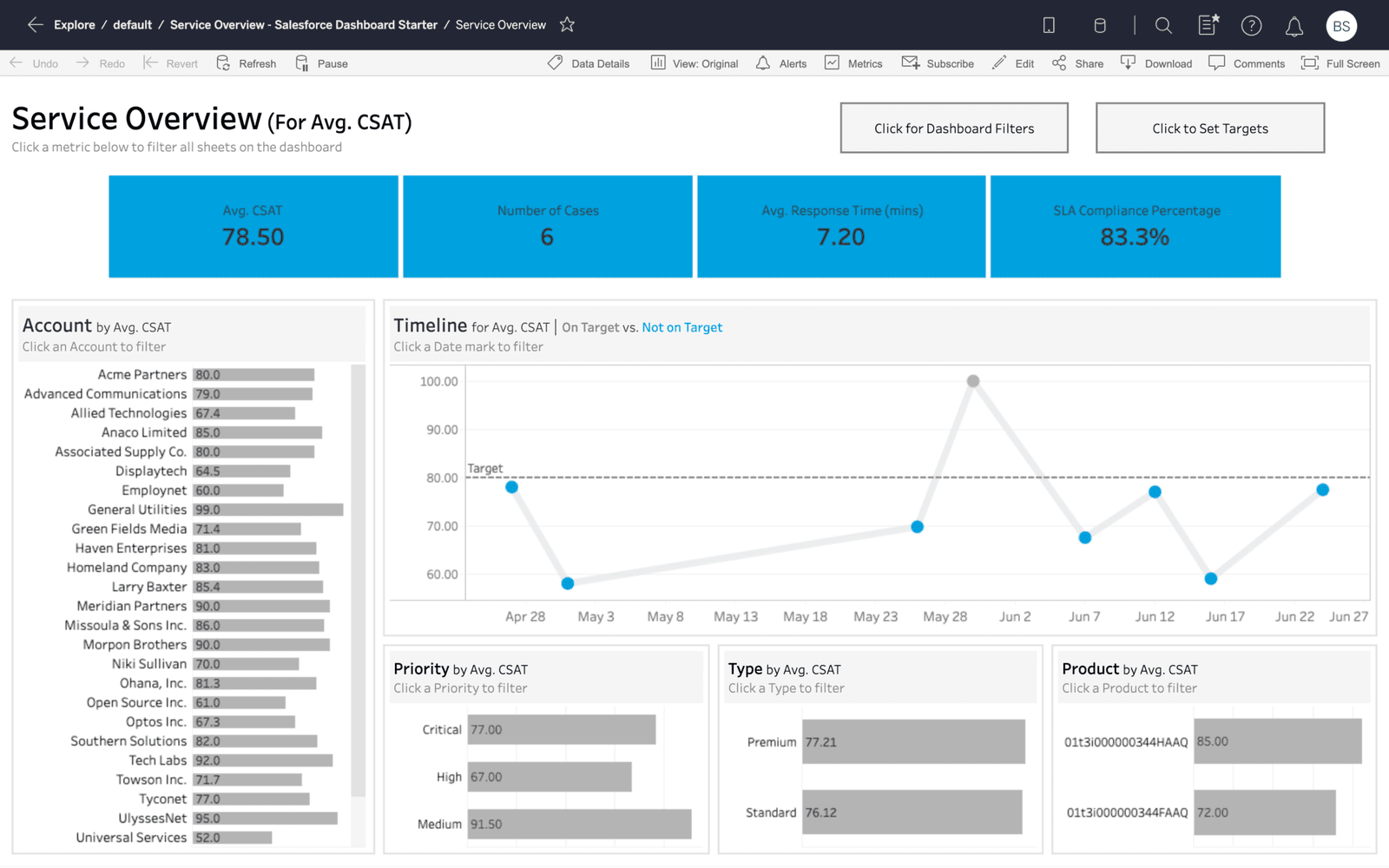
Einstein AI (post-Salesforce acquisition) powers natural language queries through Ask Data. Users type questions instead of learning the interface. Works well for stakeholders who need answers but won't invest time in training.
The flexibility comes with complexity. Drag-and-drop sounds intuitive until you're fighting the tool to get a specific layout. Power users build incredible things. Occasional users bounce off hard.
Standard at $75/user/month, Enterprise at $115/user/month. Additional licenses start at $15-35/user/month. Adds up quickly across teams.
Domo
Domo solves a specific problem: executives who want real-time metrics on their phones without learning analytics tools. The mobile experience is genuinely good, which matters when leadership actually uses it.
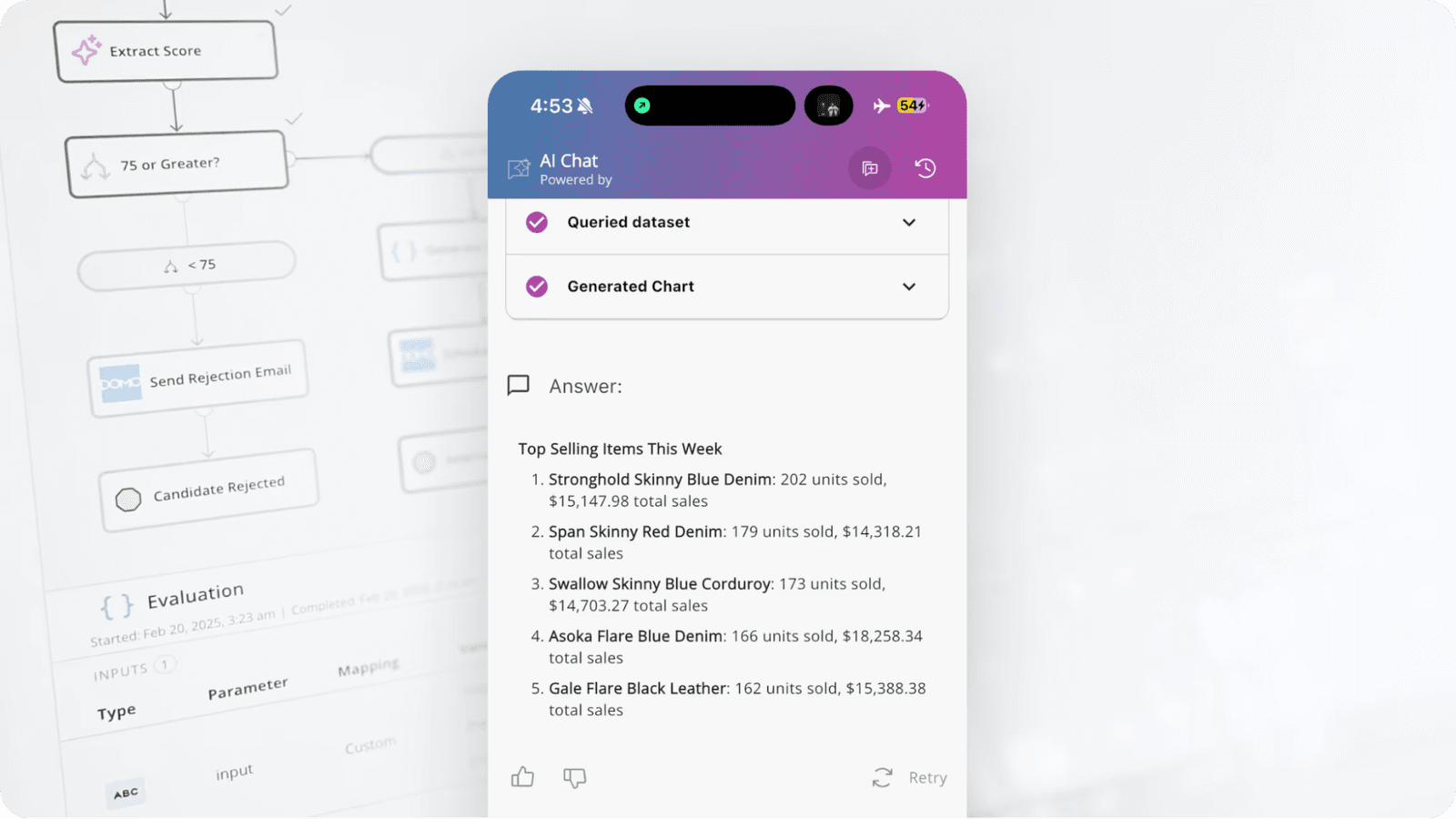
Domo.AI handles alerting and predictive analytics. Set thresholds, get notifications when something looks wrong. Useful for ops teams watching metrics that shift throughout the day.
The pricing reflects the enterprise focus. If you're running straightforward reporting at a mid-size company, you're overpaying. But for orgs with real-time requirements and executives who engage with data on mobile, it fills that gap.
No public pricing. Expect enterprise-level costs.
Natural Language Analytics
ThoughtSpot
ThoughtSpot built search-based analytics before everyone else tried copying it. Type a question, get a visualization. No SQL or dashboard configuration.
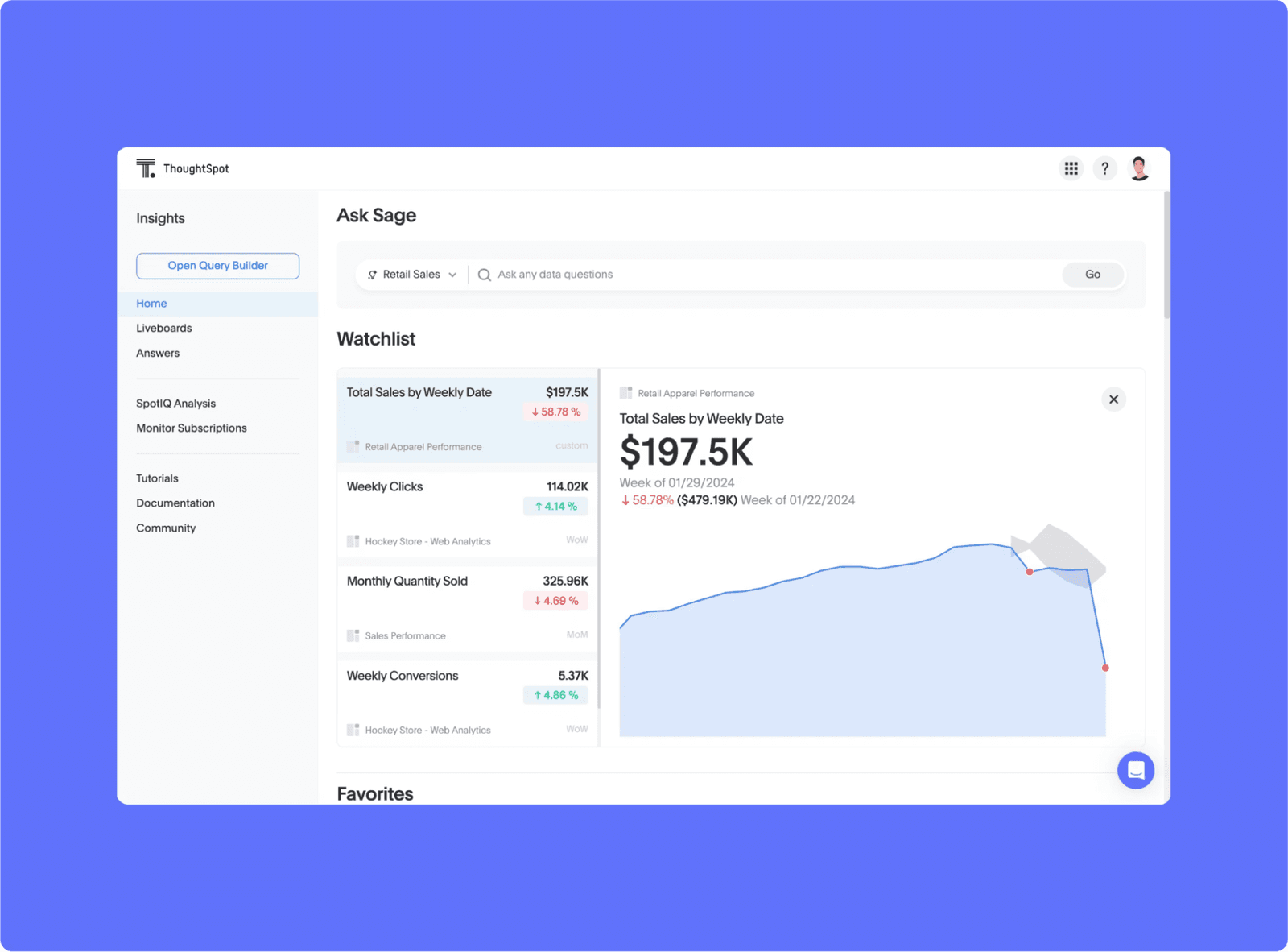
SpotIQ analyzes data in the background and surfaces anomalies automatically. Sometimes useful. Sometimes noise. Depends entirely on your data quality. If your warehouse is a mess of inconsistent naming and broken relationships, SpotIQ will confidently surface garbage.
The search works when your data model is clean. Proper metadata, clear naming conventions, well-defined relationships. Without that foundation, users get frustrated by queries that return unexpected results.
Enterprise pricing. Sales conversation required.
Data Science & ML Platforms
Zerve
Most data science platforms were built by people who never had to ship a model on a deadline. The notebook-to-production gap exists because nobody designed it.
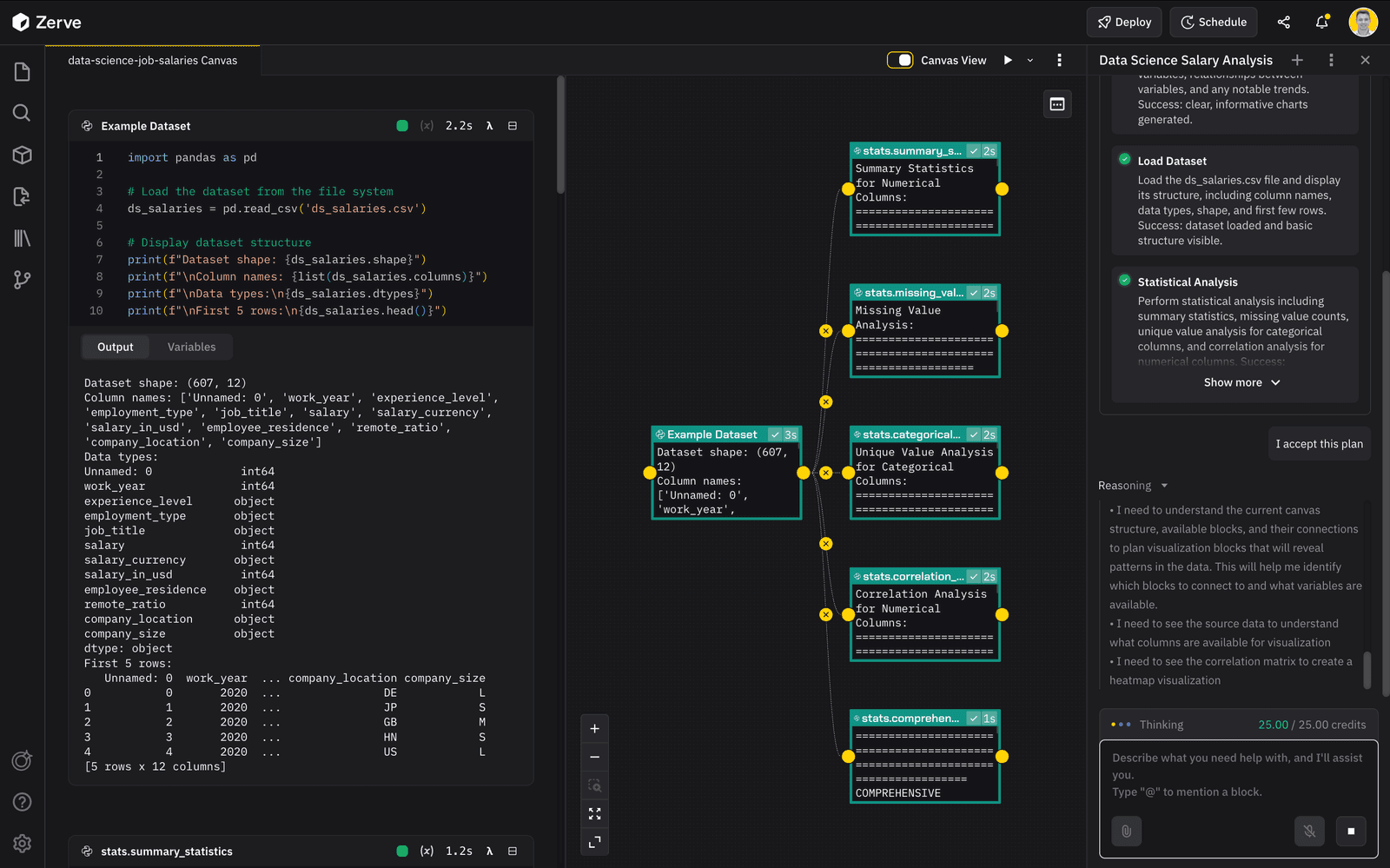
Zerve's AI agents maintain context across your project. The code suggestions account for what you've already built, what data you're referencing, what you're trying to accomplish. It eliminates the context-switching overhead that kills velocity in traditional notebooks.
Collaboration works without the Git nightmare. Multiple engineers on the same project, simultaneously, without merge conflicts on notebook JSON. Built-in version control tracks changes automatically. Deployment doesn't require a separate platform or waiting on DevOps. It's part of the same environment.
Python, R, SQL, Spark in unified environments. No more spinning up separate kernels or maintaining parallel setups.
Free tier for individuals. Pro plans at $25/month. Team plans start at $45/user/month.
Databricks
Databricks is the go-to for large-scale ML infrastructure. Petabyte-scale data processing, distributed model training, production ML systems. If that's your world, you probably already know this.
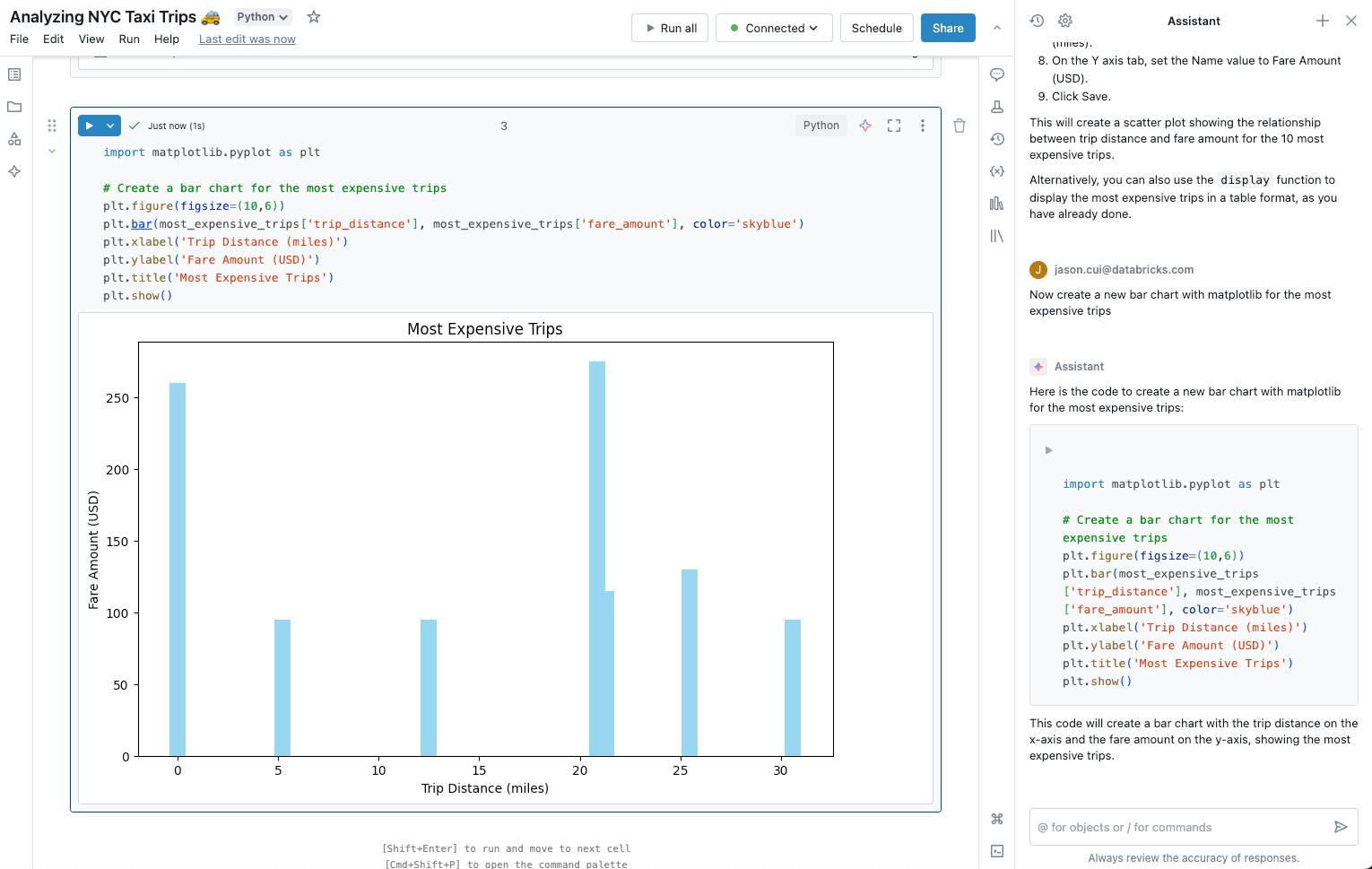
Lakehouse architecture consolidates data warehouse and data lake patterns. Fewer systems to maintain. The AI Assistant generates code. AutoML handles baseline models. MLflow tracks experiments and manages deployment.
Small teams find it overwhelming. The platform assumes infrastructure expertise and workloads that justify the complexity. Usage-based pricing punishes teams who don't optimize cluster management.
Right tool for massive scale. Overkill for everything else.
DataRobot
DataRobot automates the ML pipeline end-to-end. Upload data, it runs hundreds of model configurations, ranks performance, explains the results.
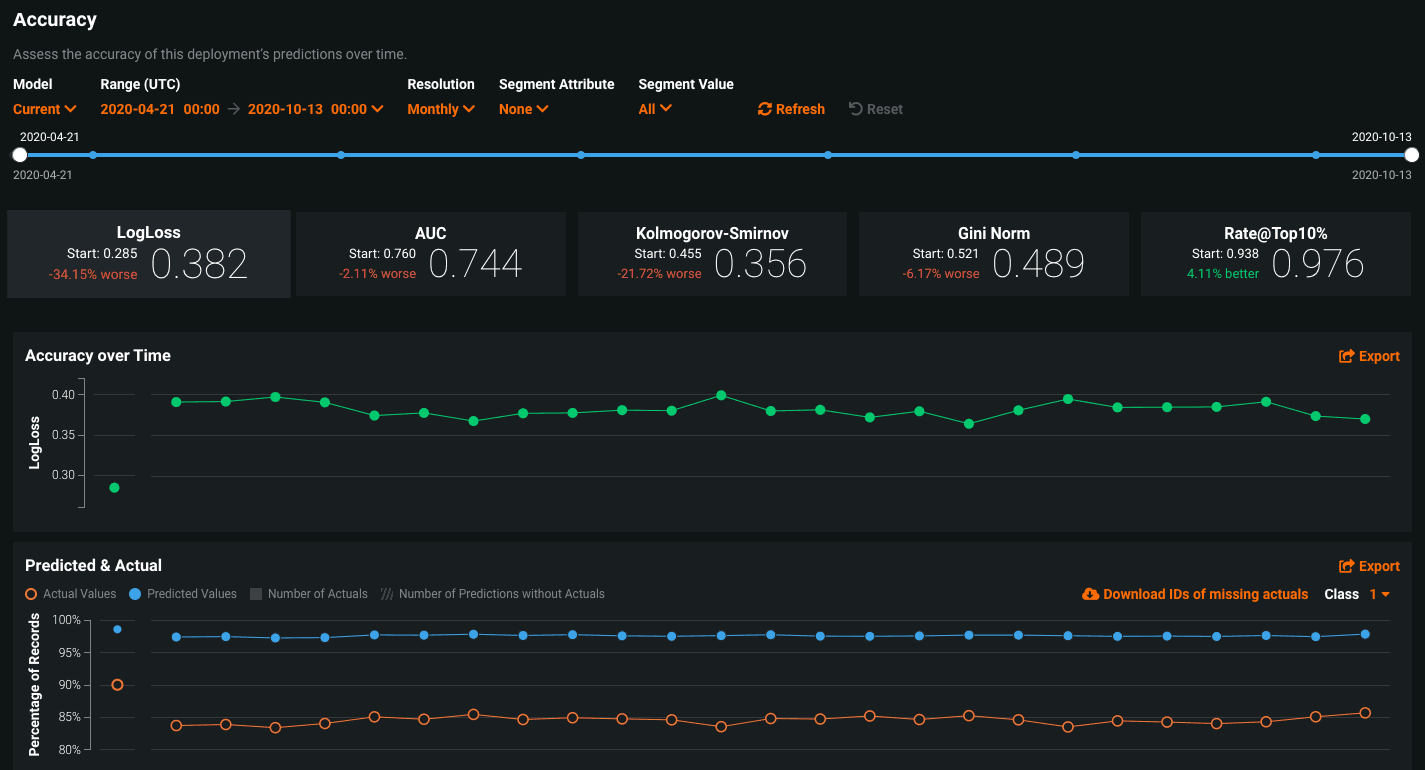
The pitch: ML capabilities without building a data science org. Works for standard prediction problems. Churn, demand forecasting, risk scoring. If your use case fits a known pattern, DataRobot accelerates time to production significantly.
Custom architectures, unusual data patterns, edge cases? You'll hit automation limits quickly. DataRobot excels within its scope and struggles outside it.
Enterprise pricing only.
Automated Analytics
Polymer
Polymer generates dashboards from raw data automatically. Upload a spreadsheet, get visualizations. The AI identifies patterns and suggests relevant charts without configuration.
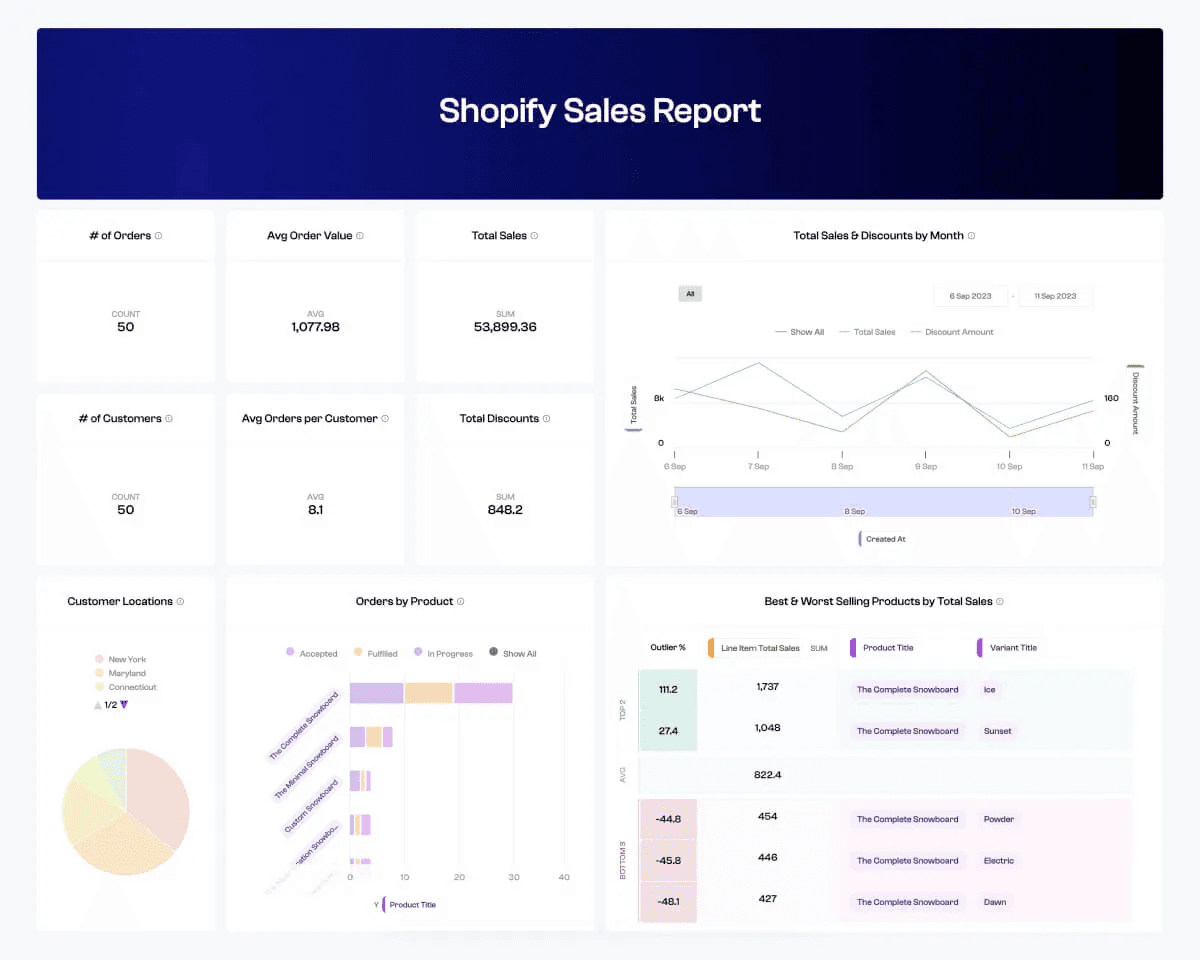
Good for exploratory analysis and fast stakeholder updates. Not a replacement for thoughtful analysis that requires human judgment about what actually matters.
Starter at $25/month, Pro at $50/month, Teams at $125/month. Annual billing saves 50%.
Sisense
Sisense targets embedded analytics. Building a product with baked-in analytics? This is the category.
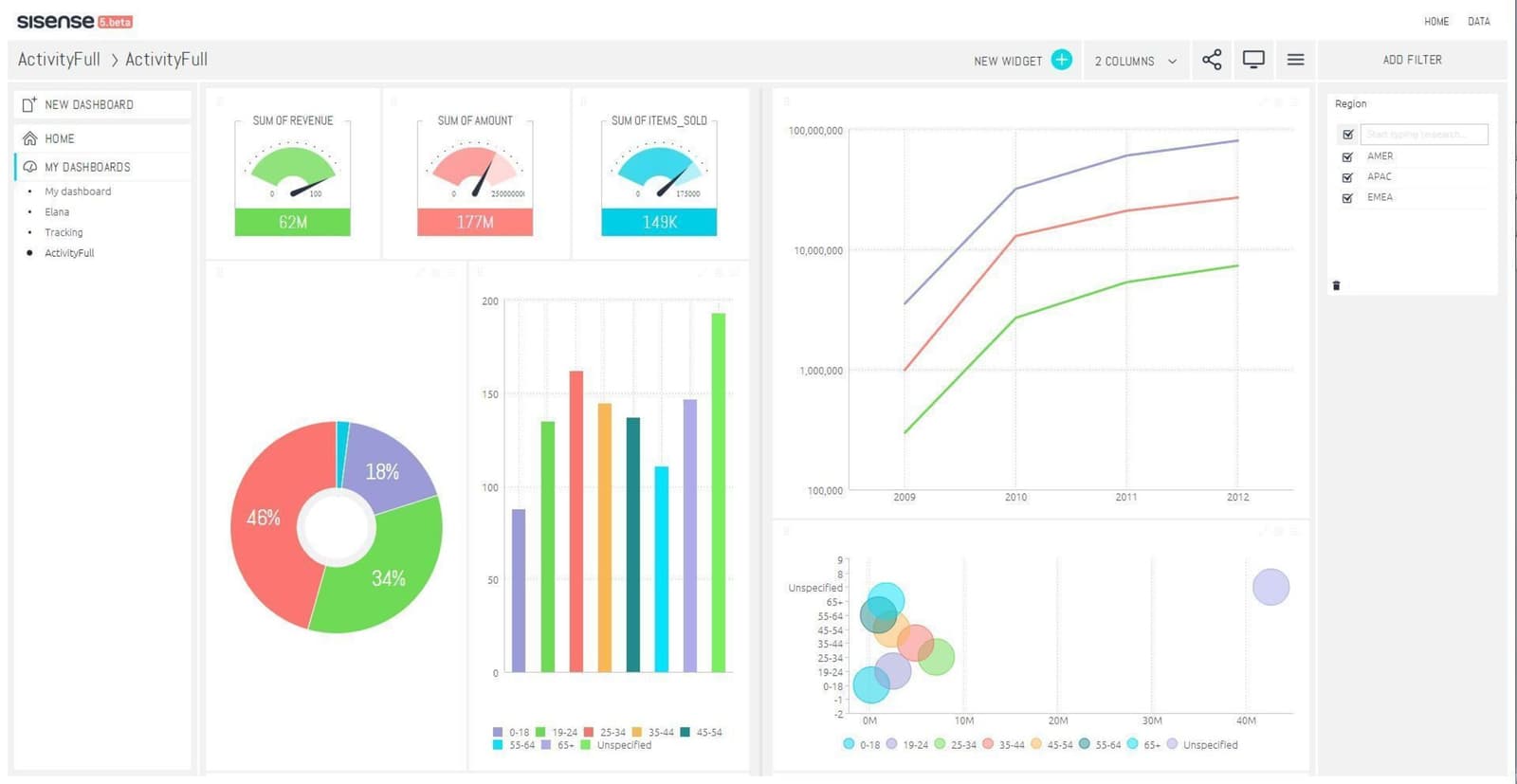
Fusion AI handles insights and automation. The platform manages complex data models well. But embedded capabilities don't help if you're building internal dashboards. Know your use case before evaluating.
Custom pricing. Software companies building data products are the target buyer.
Spreadsheet AI
Excel Copilot and Coefficient
Most analysis still happens in spreadsheets. That's not changing soon.
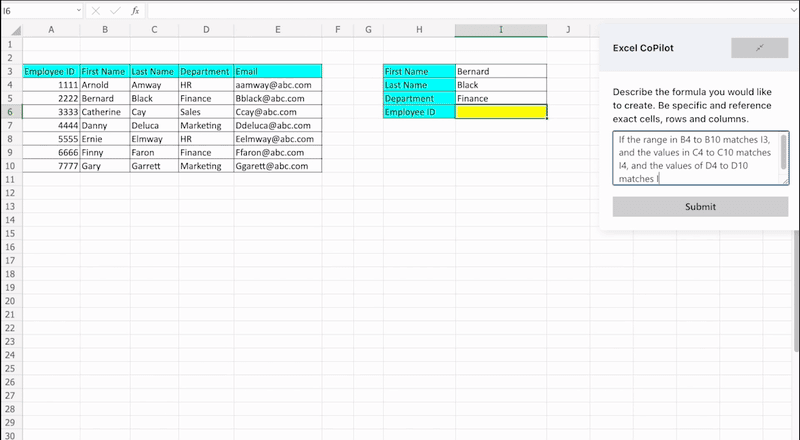
Excel Copilot generates formulas and charts through natural language. "Calculate month-over-month growth." "Highlight outliers." It handles the syntax while you handle the thinking. Requires Microsoft 365 Copilot at $30/user/month.
Coefficient connects live data sources into Google Sheets or Excel. Pull from Salesforce, HubSpot, databases without export/import cycles. AI assists with formulas and transformations. Free tier available, paid plans from $49/month.
Lower ceiling than dedicated platforms. For many workflows, that ceiling is high enough.
Matching Tools to Workflows
Business users needing quick insights: Power BI or ThoughtSpot. Power BI integrates with Microsoft and costs less. ThoughtSpot's search requires less training but demands clean data.
Visualization and reporting: Tableau for polish and presentation quality. Power BI for teams watching their budget. Domo for executive mobile use cases.
Deep data analysis and data science: Zerve for AI-native development with built-in collaboration and deployment. Databricks for infrastructure-heavy, large-scale requirements.
Automated ML: DataRobot when use cases fit standard patterns and speed outweighs customization needs.
Spreadsheet workflows: Excel Copilot or Coefficient. No migration required.
Embedded analytics: Sisense. Purpose-built.
Getting Started
Everyone's solving a different problem. Business teams need low friction. Design-focused teams need polished output. Data science teams need to stop losing hours to deployment and environment management. That's the problem Zerve actually solves. Free tier if you want to test it.