)
How AI Agents Are Changing Data Analysis in 2026

TL;DR
An AI agent for data analysis is software that can understand a data environment, execute analytical workflows, maintain context across sessions, and take actions on behalf of the user. Unlike traditional AI assistants, which primarily generate suggestions, agents can perform multi-step tasks and adapt their behavior based on previous results
Introduction
There is a difference between an AI that helps you write code and an AI that understands what you are trying to build. The first is a faster autocomplete. The second changes what is possible in a single analyst session.
In 2026, the transition from AI-assisted to AI-agentic data analysis is underway. Here is what that actually means in practice.
What Makes an AI Agent Different
A code suggestion tool works on whatever is in front of it. Paste a function, it completes it. Ask a question, it answers based on what you typed. The context window is the conversation.
An AI agent for data analysis needs a different kind of context. It needs to understand the data environment: what tables exist, what they contain, how they relate, what has already been analyzed. It needs to maintain state across a session. It needs to take actions, not just suggest them.
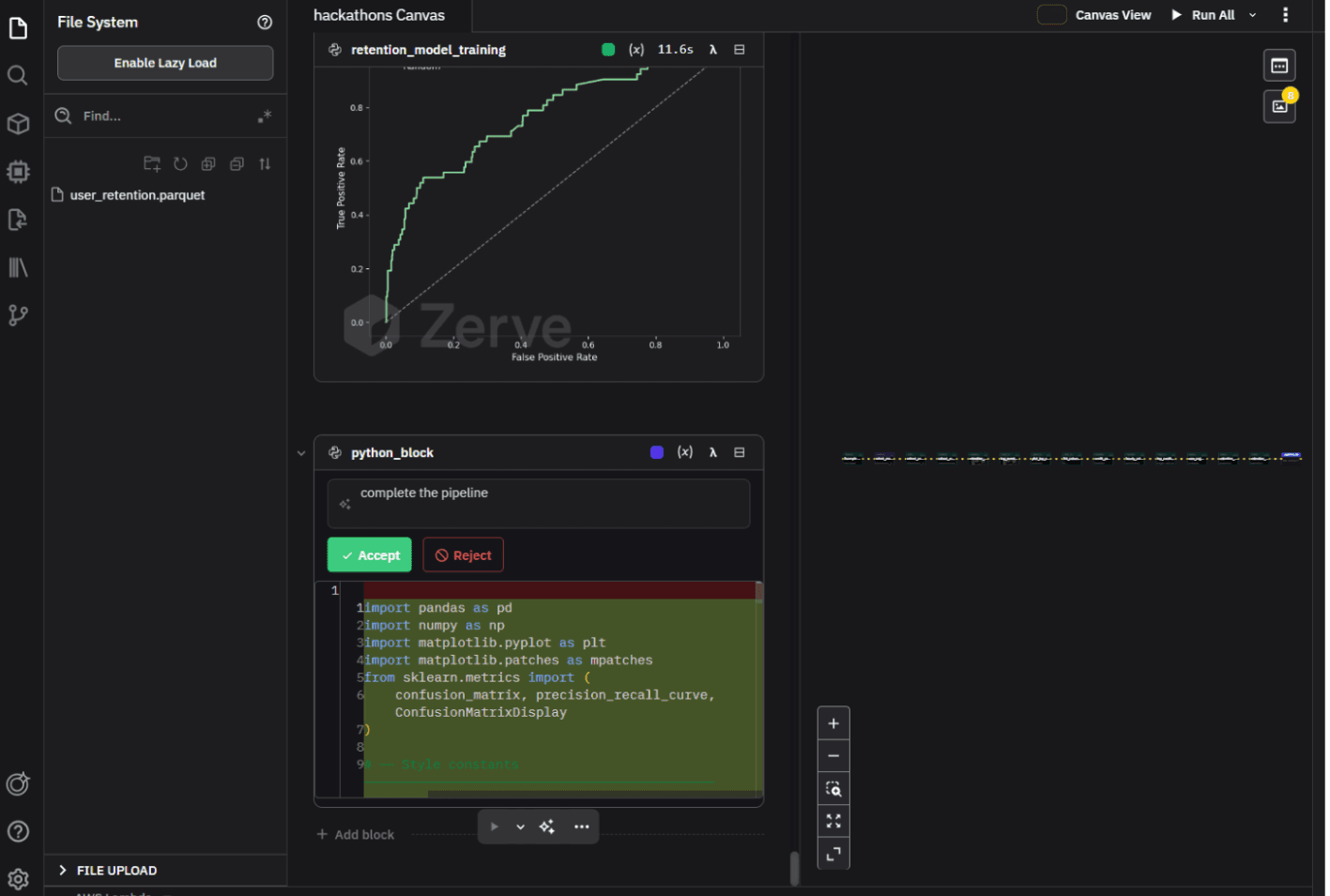
The practical difference is velocity. An analyst working with an agent that understands their data environment answers questions in minutes that previously required hours. The agent does the work. The analyst directs it.
The Context Problem in Data Analysis
Traditional AI assistance fails at a specific point: when the relevant context is not in the prompt. Ask a general LLM to write a query against your database, it writes plausible SQL that may or may not match your actual schema.

Data discovery builds an agent-maintained map of the data environment: schemas, relationships, data types, and metadata. The agent uses this map when generating queries, suggesting analysis directions, and interpreting results.
Institutional knowledge captures the analysis history. Every analysis the agent runs is stored and made available to future sessions. When a researcher asks a question that overlaps with something a colleague analyzed six months ago, the agent surfaces that context rather than starting from scratch.
Execution, Not Just Suggestion
The other dimension that separates agents from assistants is execution. An assistant suggests code. An agent runs it.
In Zerve's DAG-based notebook environment, the agent executes analysis across independent cells. It handles the execution graph, caches results, and surfaces findings. When it hits an error, it diagnoses and corrects rather than surfacing the error to the user as their problem.
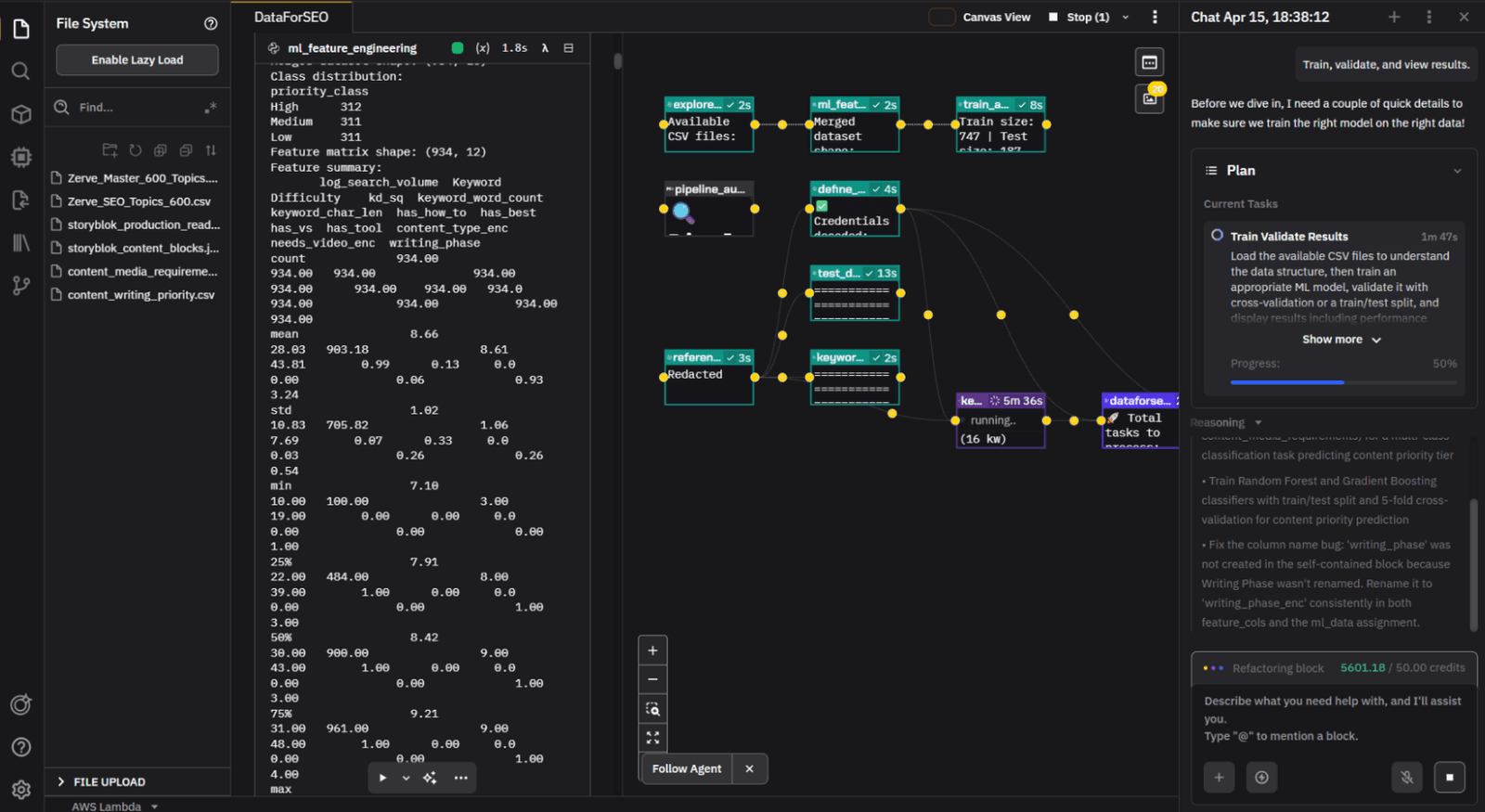
The ratio of time spent on mechanical execution versus time spent on interpretation and direction shifts substantially. Analysts who spent 60% of their time writing and debugging code now spend that time deciding what the code should be looking for.
The Deployment Gap
The gap between analysis and deployment has been a persistent problem in data science. Build a model in a notebook. Hand it to engineering. Wait weeks for a production endpoint.
In Zerve, one-click deployment means the agent builds the deployment from the same environment where the model was developed. No separate platform. No translation between environments. The same artifact goes to production.

For data science teams that measure velocity in time from analysis to production impact, this change is larger than any improvement in code suggestion quality. The bottleneck was never the code. It was the handoff.
What "Agentic" Actually Requires
Not every platform that uses the word "agent" is describing the same thing. The meaningful technical requirements for a genuine data analysis agent are:
Persistent data context: Understanding of the data environment that exists across sessions and is maintained as the environment changes.
Stateful execution: The ability to run multi-step analytical workflows where each step has awareness of prior steps and can branch based on intermediate findings.
Memory across sessions: Capture and retrieval of prior analyses so research compounds rather than resets.
Deployment capability: The ability to move from analysis artifact to production artifact without changing platforms or teams.
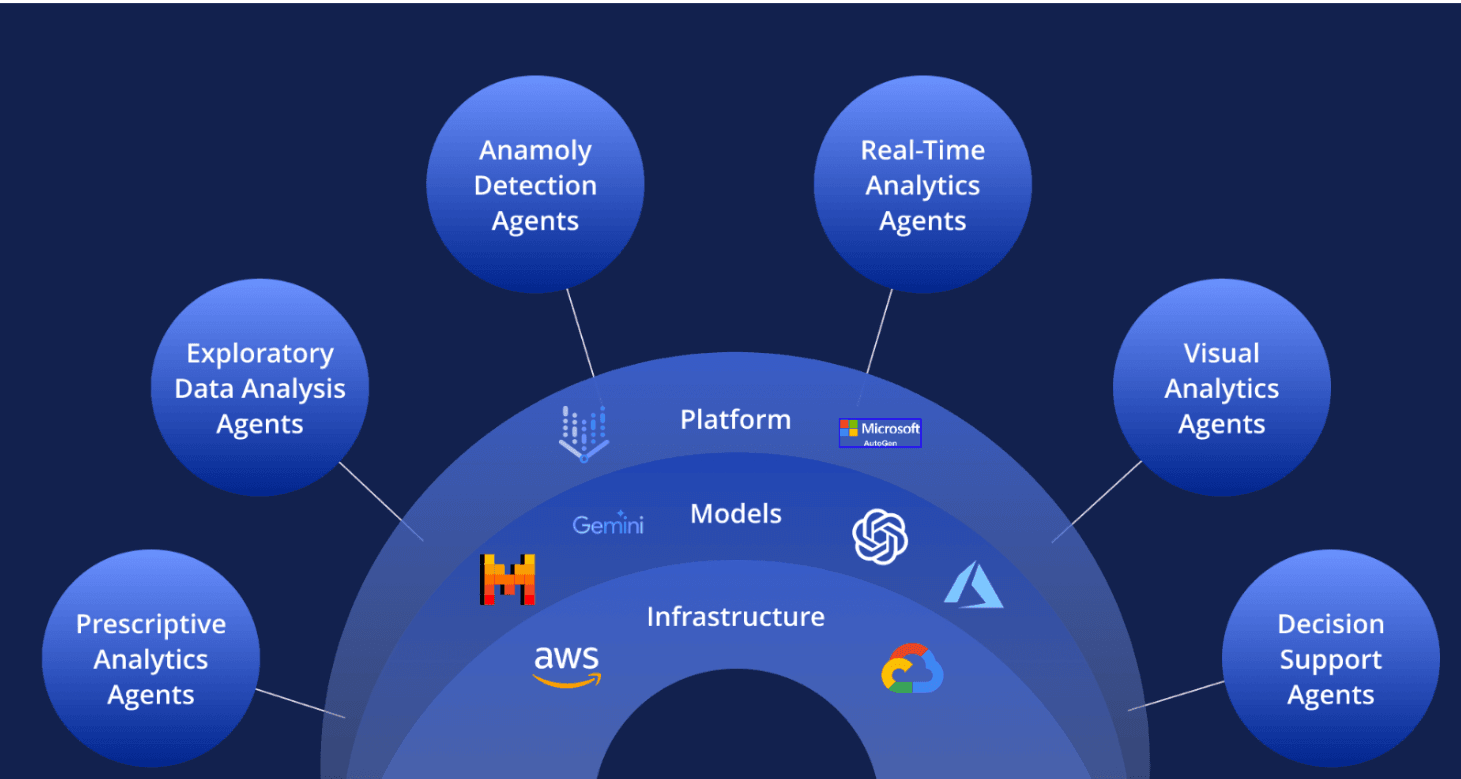
A chatbot that generates SQL is not an agent. A code suggestion plugin is not an agent. That is what separates Zerve's approach from platforms that are retrofitting the "agent" label.
Implications for Data Teams
The shift to agentic data analysis has organizational implications beyond tooling. The ratio of data scientists to the work they can produce changes. A team of five using agentic tooling can cover what previously required ten in terms of analysis throughput.
The knowledge retention problem changes too. When institutional knowledge captures every analysis, researcher turnover does not mean losing the context they accumulated.
The questions change. When mechanical execution is fast, data teams spend more time on the questions that require judgment: what to measure, what the finding means, what to do about it.
Where This Is Going
The direction is clear. AI agents in data analysis will handle more of the mechanical work, more of the context management, and more of the execution. The analyst role will continue shifting toward direction, interpretation, and judgment.
The platforms that will matter are the ones with genuine persistent context. Genuine execution capability. Genuine memory across sessions. And genuine deployment integration.
Agentic data analysis is ultimately about reducing the time between a question and a reliable answer. The platforms that will matter are the ones that combine context, execution, memory, and deployment in a single environment.
Zerve was built around those principles. Start with the free tier to see what agentic data analysis looks like in practice.