)
10 Best Backtesting Platforms for Quant Funds in 2026

TL;DR
Most backtests overstate live PnL by 30 to 60 percent. The platform you build on is half the reason. Here is the honest landscape.
Introduction
A backtest that survives contact with live markets is rarer than the marketing literature suggests.
Most strategies that fail in production looked profitable in research. The platform sits underneath every one of those failures. It chooses what kinds of mistakes are easy to make. It chooses how rigorous validation feels relative to the shortcuts.
This is the working list of backtesting platforms serious systematic funds use in 2026. The dimensions that matter, the trade-offs that actually bite, and where each platform fits.
What Actually Separates Backtesters
Five things matter. Most evaluations focus on the wrong ones.
Notice what is not on this list: charting, asset class coverage, language support. Those matter, but they are commodity. The list above is where strategies live or die.
The Landscape
Open-Source Frameworks
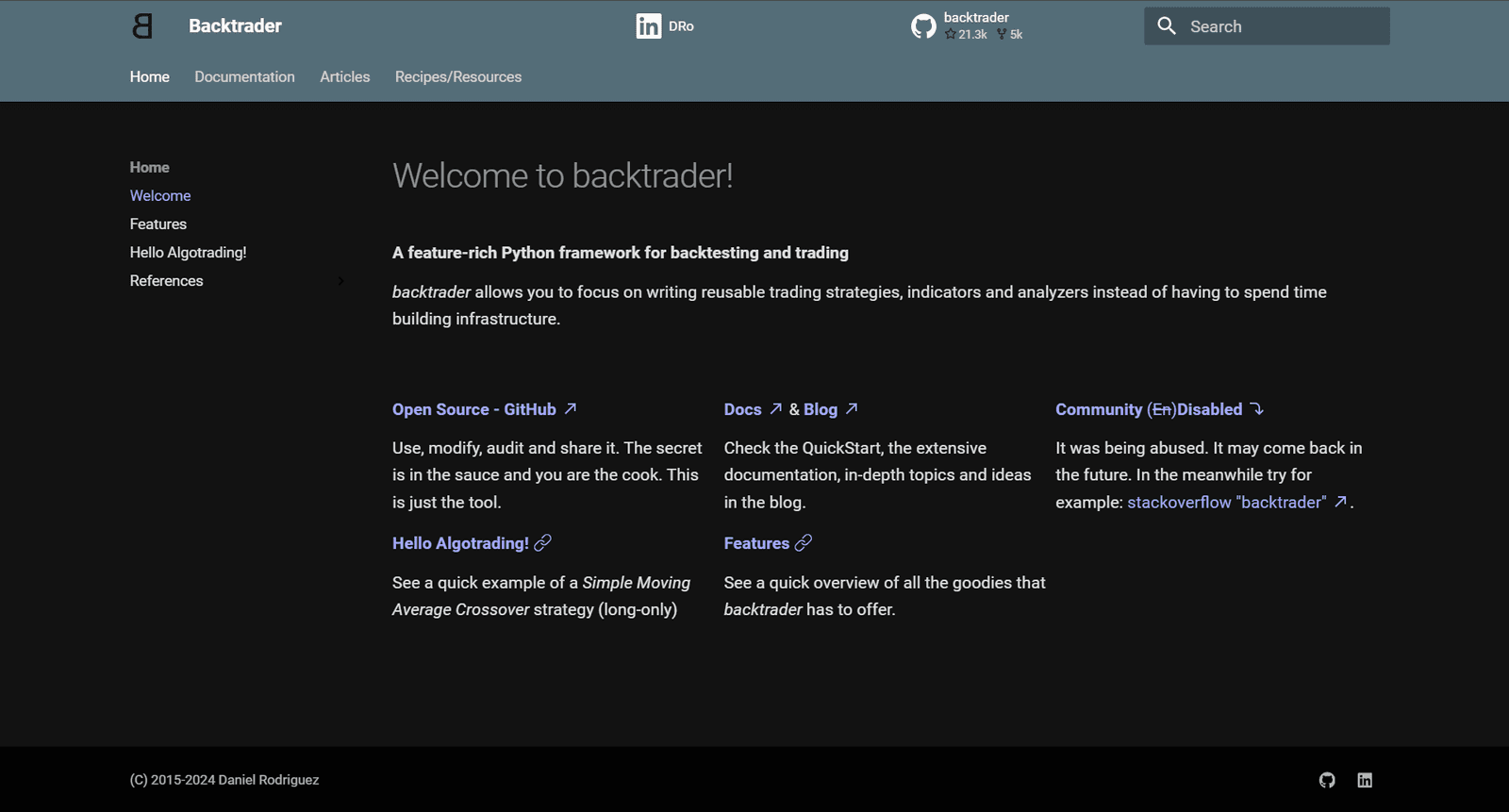
Backtrader
The most flexible Python backtester. Event-driven, clean API, decent docs. For researchers who want Python with no platform constraints, Backtrader stays out of the way.
That is the limitation too. Backtrader will run a look-ahead-biased strategy without warning. Cost models are whatever you write. Slippage is whatever you assume. The discipline is entirely on the researcher.
For experienced quants who know what to enforce, fine. For teams trying to build research velocity with a bench that includes juniors, the lack of guardrails costs more than the flexibility gains.
Zipline
The Quantopian engine, kept alive by community maintenance. The Pipeline API for factor research is the strongest piece. It handles point-in-time correctness more carefully than most open-source alternatives.
The constraint is scope. Zipline was built for daily-frequency, US equities, factor strategies. Anything else, intraday, futures, options, cross-asset, hits friction quickly. The community is helpful but no longer actively pushing the frontier.
Strategy Development Platforms
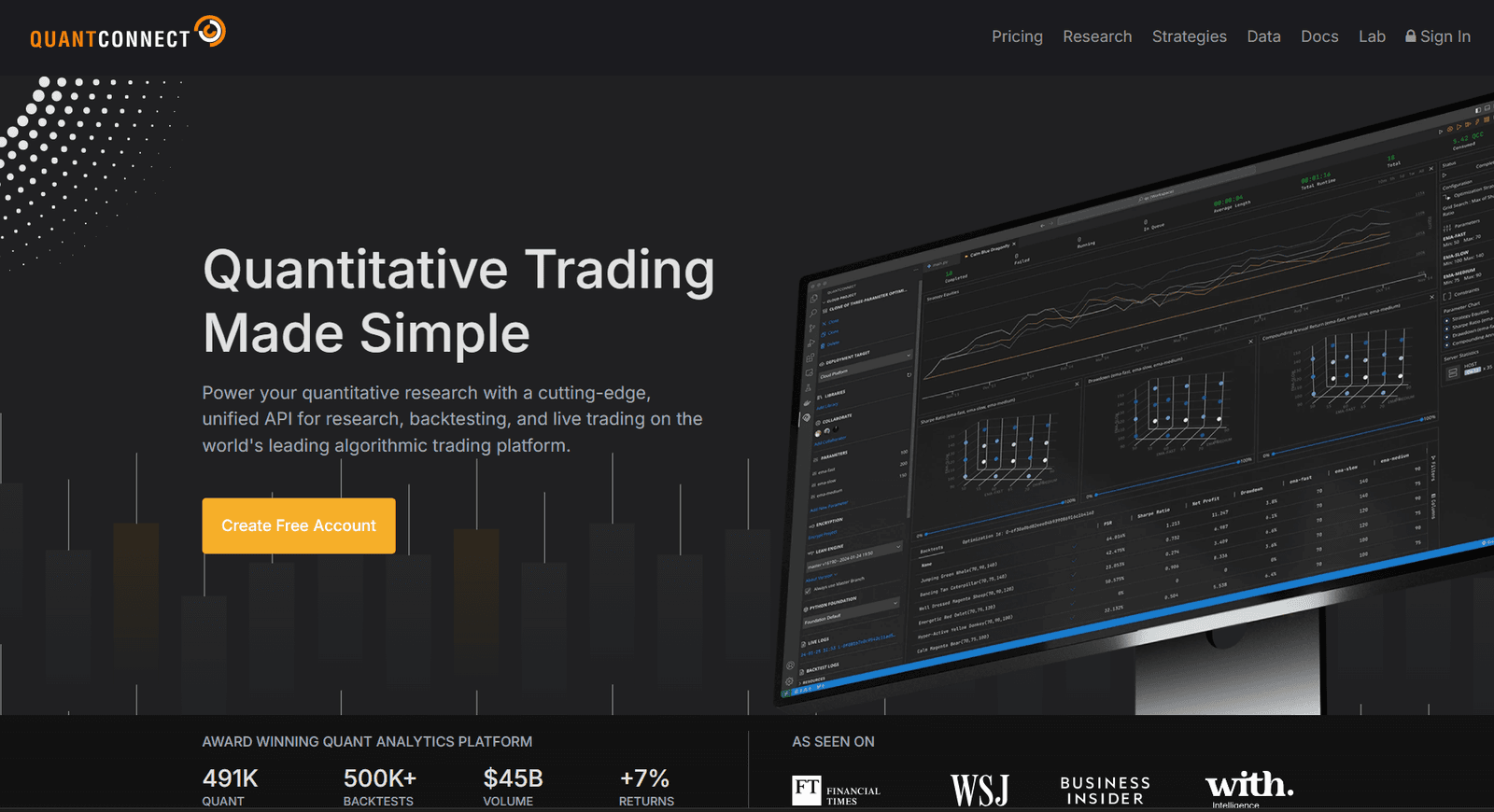
QuantConnect
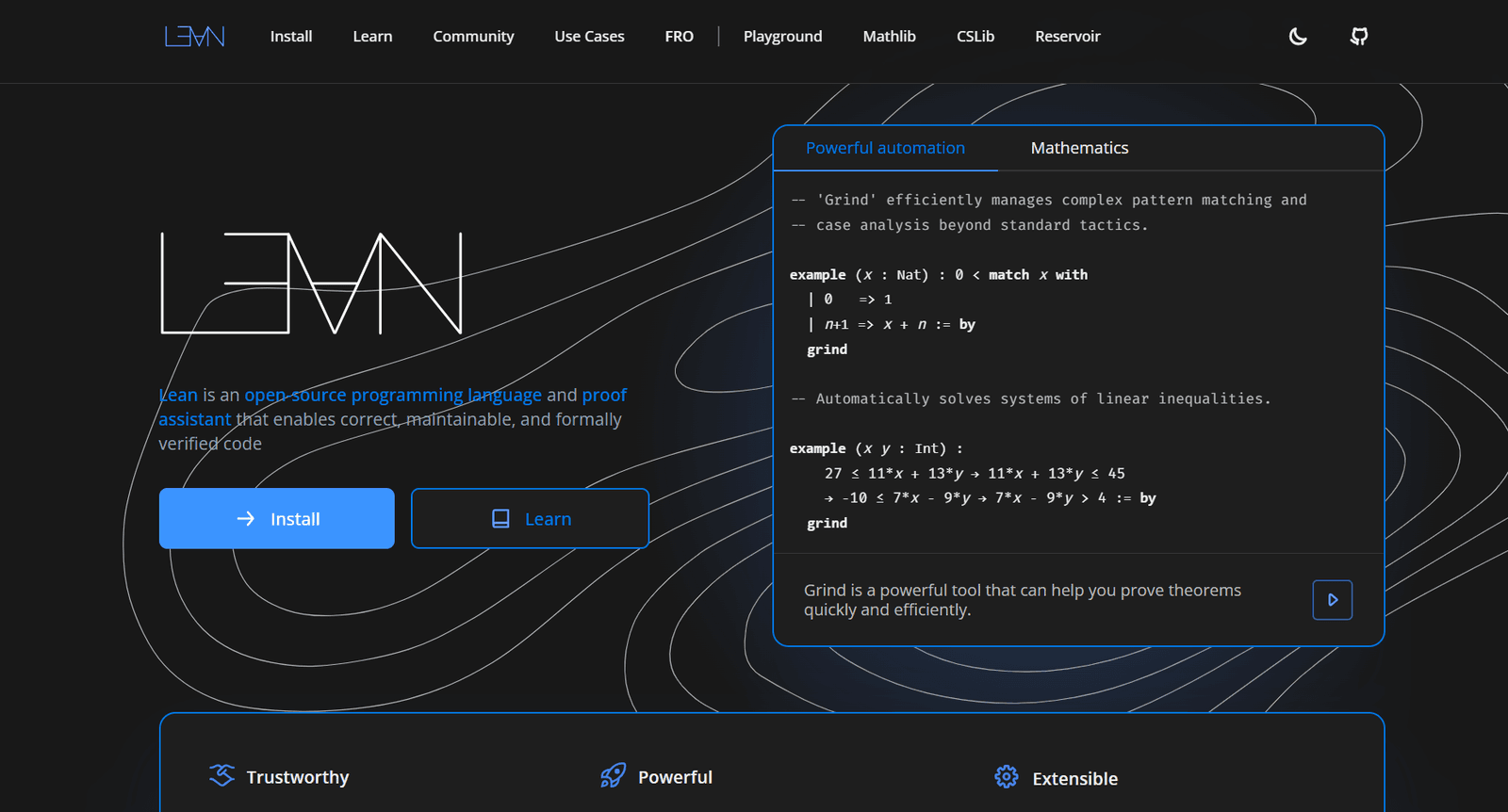
Historical data, backtesting, and live execution in one platform. The Lean engine handles event-driven backtesting across asset classes. Multi-broker live trading.
Optimized for getting strategies to execution rather than for pure research. Useful for systematic traders who care about the full pipeline. Less useful for funds where research and execution live on different teams with different infrastructure.
WorldQuant BRAIN
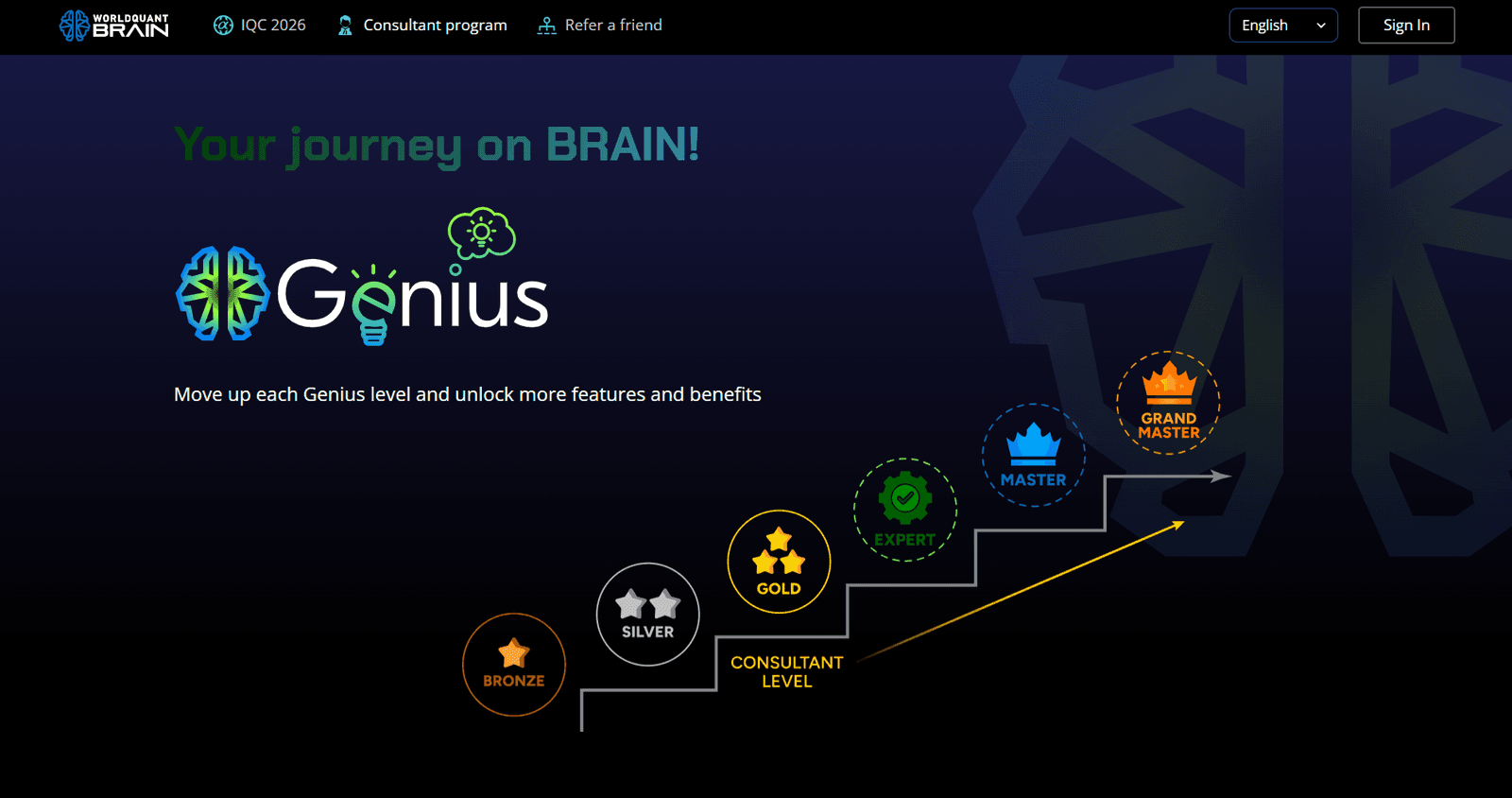
WorldQuant's alpha discovery framework, made externally available as a recruitment and crowdsourcing channel. Researchers write expressions in WorldQuant's alpha syntax against the firm's data and infrastructure.
The constraint is also the appeal. You are not getting general-purpose backtesting. You are getting backtesting inside WorldQuant's framework, on WorldQuant's terms.
Lean (Quantopian Enterprise)
The Lean engine without the QuantConnect cloud. Funds run it inside their own perimeter. Addresses the security objection that prevents some funds from using cloud-hosted backtesting.
The trade-off is operational. The fund manages deployment, integration, ongoing maintenance, and the gap between Lean updates and what the fund's deployment runs.
Bloomberg-Integrated
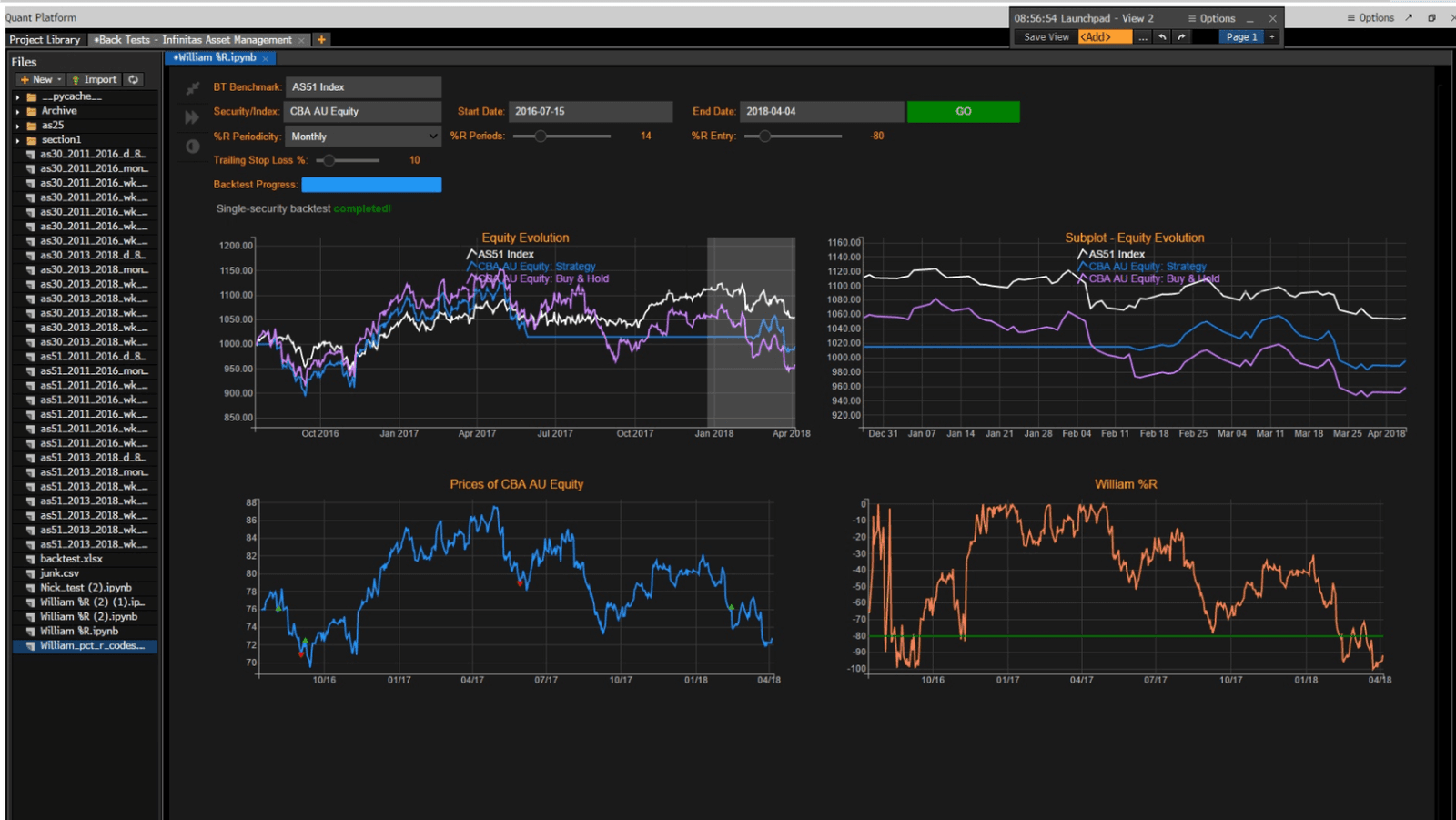
Bloomberg BQuant
Python backtesting inside the Terminal. For researchers who already live in Bloomberg, no context switch.
The data access is unmatched for liquid public markets. The platform itself is more limited than purpose-built research environments. Complex strategies, custom data, and large parallel runs hit the boundaries quickly. Pairs well with a stronger research environment when the work gets serious.
Mathematical Prototyping
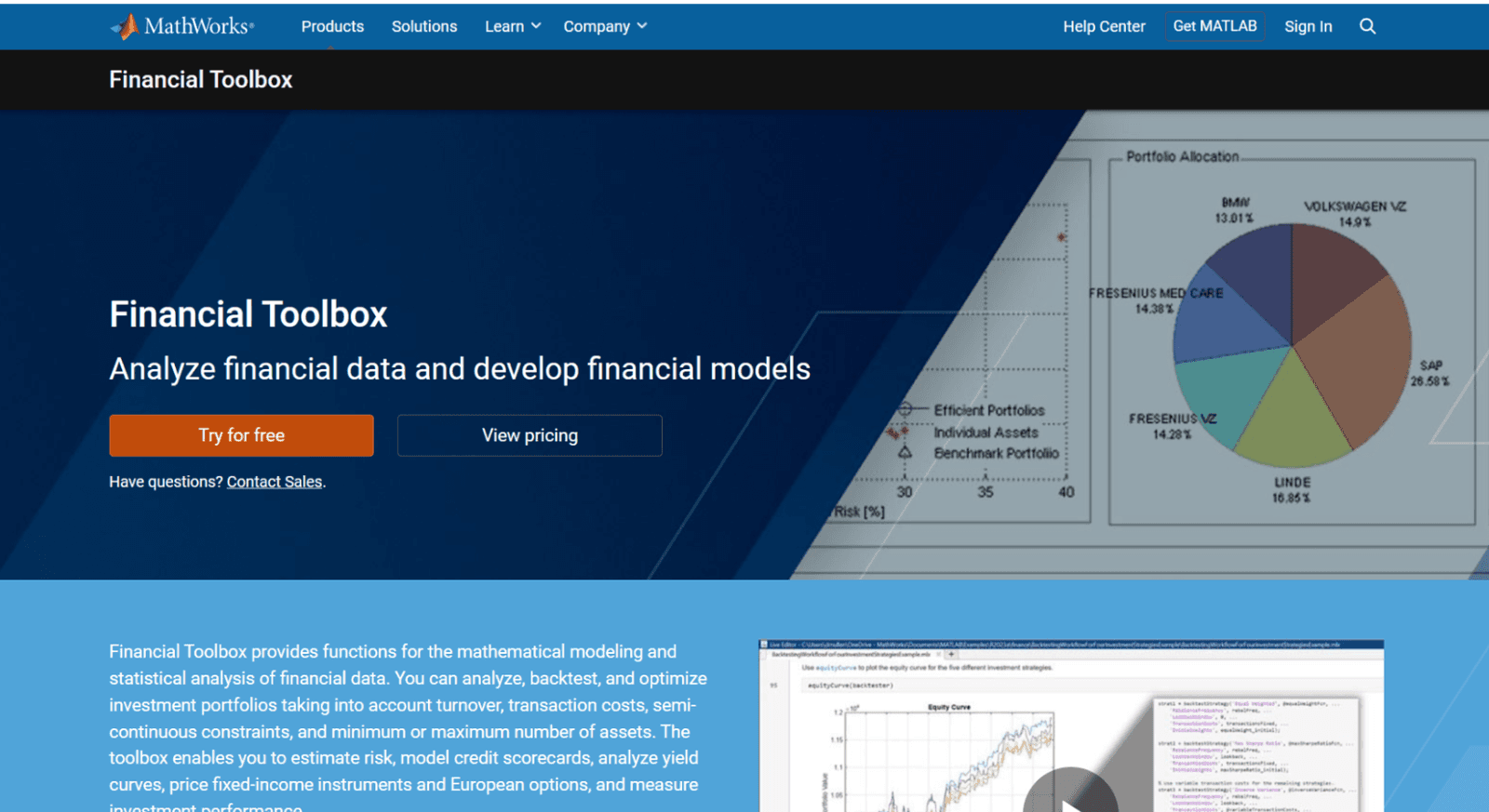
MATLAB Financial Toolbox
Where MATLAB still wins: options pricing, fixed income analytics, signal processing applied to financial data. The toolbox depth is real.
The lasting cost is the prototype-to-production gap. Most funds that prototype in MATLAB end up reimplementing in Python or C++ for production. Doing the work twice is expensive enough that newer teams just start in Python.
Specialized Frameworks
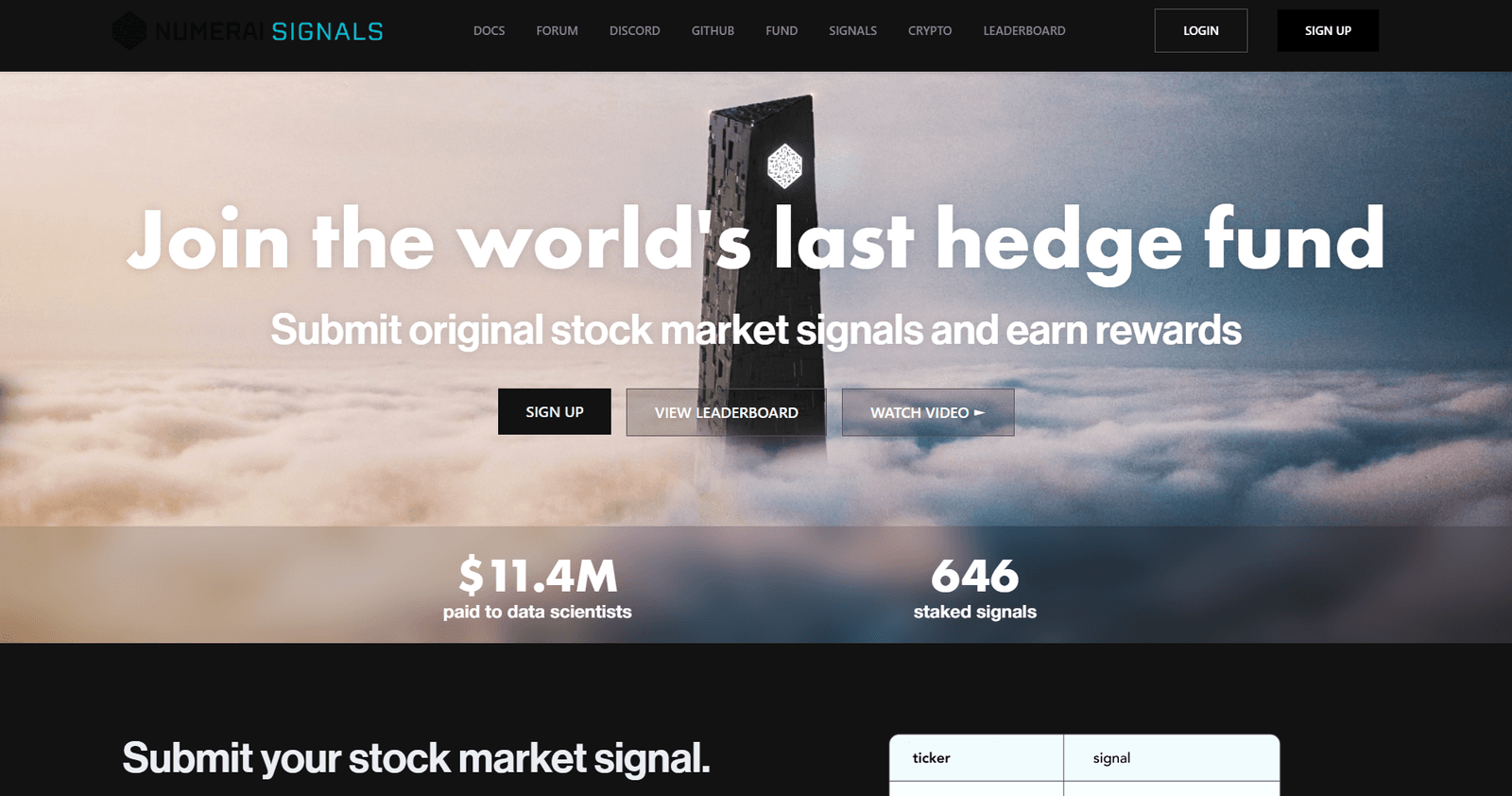
Numerai Signals
Submit signals, Numerai evaluates them against its models, payouts depend on signal quality. Useful for researchers interested in the tournament structure. Not a general backtesting platform.
In-House Development
Custom in-house platforms
The traditional answer at large systematic funds. Build the engine, the data layer, the factor library, the execution path. Full control, full responsibility.
Annual fully-loaded costs for a serious internal platform team land in the mid-seven-figure range, not counting infrastructure. The case for building was substantially stronger in 2018 than it is in 2026, largely because the widening AI capability gap between building and buying has made it more expensive to catch up with what off-the-shelf platforms now offer.
Most funds in 2026 land on hybrid: keep the differentiated components internal, replace the commodity research environment.
Three Bad Patterns That Show Up Across Platforms
❌ Bad
A team backtests a 60-parameter strategy on five years of daily data, picks the best parameters by Sharpe, and reports the in-sample number as the expected return. Six months later, live performance is half of what was promised.
The platform did not enforce held-out test data. The methodology was the researcher's job. The strategy was overfit and nobody caught it.
✓ Good
Same strategy, same team. Platform enforces walk-forward as a first-class concept. Held-out data is partitioned at project creation and untouchable until the final review. The 60-parameter version fails out-of-sample. The team simplifies to 8 parameters with stronger priors. Live performance matches the held-out estimate within 20%.
The platform did not catch the bad strategy. It made it easy to do the right thing.
❌ Bad
Backtest assumes execution at midpoint with zero slippage. Strategy looks profitable. In production, half the alpha is consumed by spread and impact.
The platform shipped with optimistic default cost models. Nobody changed them.
✓ Good
Backtest defaults force the researcher to specify spread, slippage, and impact assumptions. Each one has to be justified. The strategy looks less profitable in research and roughly matches that in production.
What to Evaluate When You Choose
Backtesting platform checklist
☐ Does it enforce point-in-time data, or trust the researcher to enforce it?
☐ Are spread, slippage, and market impact first-class, or afterthoughts?
☐ Can it run hundreds of concurrent backtests without manual orchestration?
☐ Is walk-forward analysis the default validation, or does it require extra code?
☐ Will a backtest from today reproduce identically in 12 months?
☐ Does it integrate with the data, factor library, and risk systems you already have?
☐ For sensitive data: does it support deployment inside your perimeter?
A Newer Option Worth Mentioning
The platform that has changed how this conversation goes in the last 18 months is Zerve. Worth noting for two specific reasons relevant to backtesting.
First, the DAG-based notebook structure caches each cell's output. A 40-minute backtest does not re-run when an upstream signal cell changes. Iteration cycles compress meaningfully.
Second, parallel execution is a default rather than a project. Running a thousand backtests across parameter configurations and regimes is a normal workflow rather than a separate orchestration build running 1,000 backtests in parallel.
Free tier for individuals. Enterprise deployment supports air-gapped configurations for funds with strong security requirements. Worth a look if research velocity is your binding constraint.
Bottom Line
Backtrader and Zipline if your team is experienced and you want full control with no guardrails.
QuantConnect if you want backtesting and live execution in the same environment.
Bloomberg BQuant if you live in the Terminal and your strategies are equity-focused.
In-house if you have ten-plus years of platform investment and serious HFT or specialized requirements.
Newer agentic platforms, if research velocity is the bottleneck, and the AI workflow is now part of how the team works.
The bottleneck in quant research is rarely alpha generation. It is iteration speed, validation rigor, and the gap between what the backtest claims and what live execution delivers. Pick the platform that closes those three.